Video, Webinar
12 October 2026
The hub supports research on threatened and migratory marine species and ecological communities to better understand population trends, impacts, and drivers. These projects bring people together to consolidate and provide access to available knowledge, identify research needs, and collect data through surveys, tagging, mapping, citizen science and experimentation.
This webinar presents findings from two projects nearing completion under the NESP Marine and Coastal Hub Research Plans 2023 and 2024, exploring efforts to restore a threatened ecological community in the Cocos (Keeling) Islands (Project 4.11) and how interactions with fishers are improving our understanding of threatened sea snakes (Project 3.12).
Presentation 1: Improving the health of seagrass and turtles – Cocos (Keeling) National Park
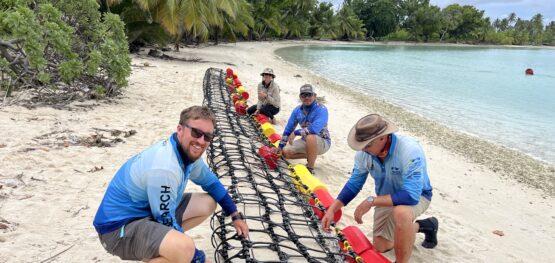
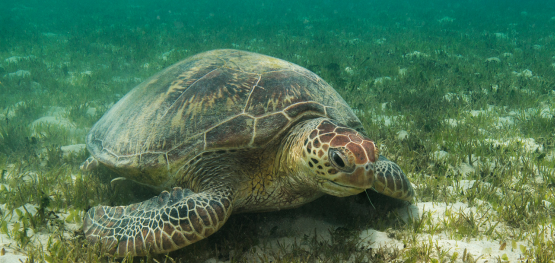
Project 4.11 responds to the near‑collapse of seagrass meadows in the Cocos Keeling Islands, which resulted in an 80% loss that threatens both cultural values and key species such as green turtles. Working with the Cocos Malay community and marine partners, it is establishing large‑scale turtle exclusion and refuge areas to enable seagrass recovery and supply propagules for future restoration. Over the past 2 years, restoration methods have been refined alongside monitoring of light, temperature and water quality to guide long‑term action. This project’s findings will be discussed.
Presentation 2: Sea snake monitoring: improved collection of fisher bycatch data
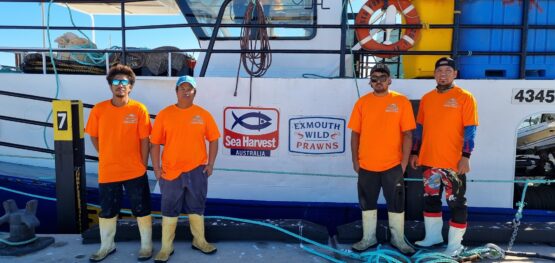
Project 3.12 addresses declining sea snake populations in northern Australia by strengthening the accuracy and consistency of bycatch reporting across trawl and trap fisheries. By establishing a standardised crew-member observer program, training fishers in safe handling and data collection, and comparing fishery‑dependent and independent datasets, the initiative builds a skilled network of industry partners that generates reliable information on species diversity, encounter rates, life‑cycle patterns, and regional population structure. This project’s findings will be discussed.