
Article
3 June 2026
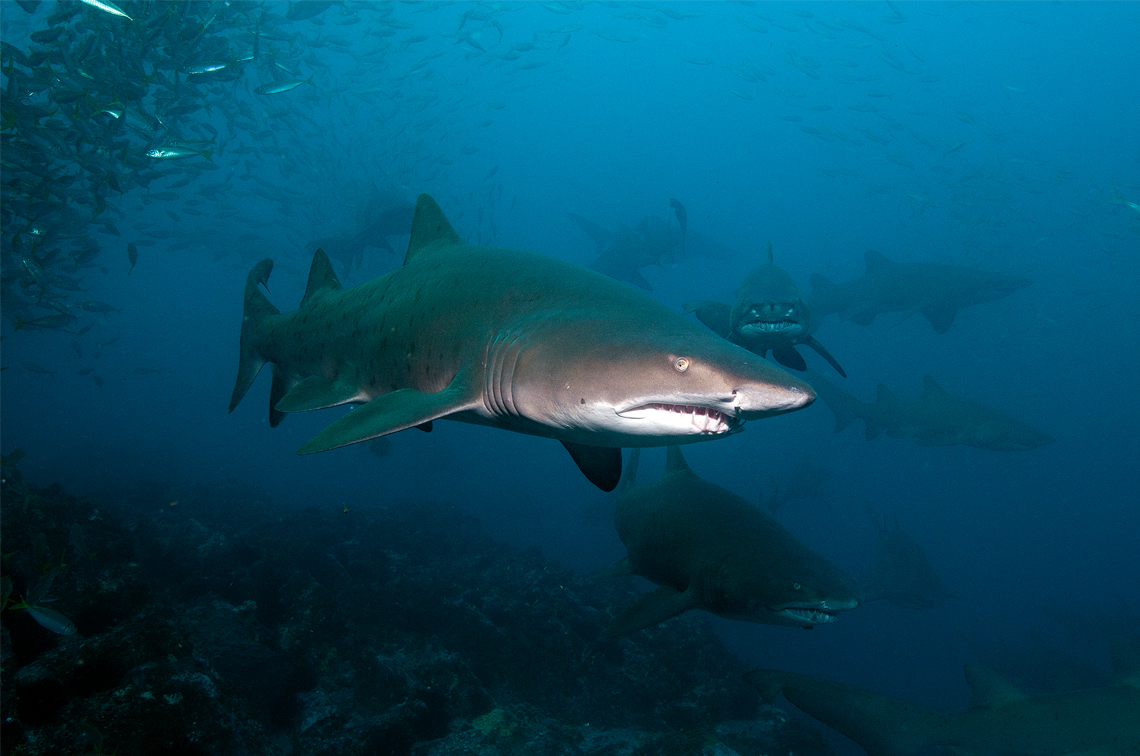
A review of grey nurse shark aggregations has laid the groundwork for bringing Australia’s approach to defining grey nurse shark aggregation sites into line with national and international frameworks.
The formal identification of aggregation sites underlies conservation actions for threatened species worldwide. The international Important Shark and Ray Areas (ISRA) Framework and the national framework for determining Biologically Important Areas (BIA) for marine species have been developed to support this process.
Australia’s existing definition of grey nurse shark aggregations was determined in the early 2000s, long before these frameworks came into being. The Australian Government identified the need to update and formalise its definition of a grey nurse shark aggregation site and develop criteria to ensure a consistent assessment approach.
The Marine and Coastal Hub ‘Grey nurse shark aggregations’ project was developed in response to this need. It was led by David Harasti of the NSW Department of Primary Industries and Regional Development (DPIRD) and Russell Bradford of CSIRO in collaboration with Queensland, New South Wales and Victorian state agencies and universities.
“Grey nurse sharks aggregate at specific sites along their migration routes that are important for mating, pupping, feeding and resting,” Dr Harasti says. “The 19 key aggregation sites listed off eastern Australia fit the existing definition of being consistently occupied by five or more grey nurse sharks.
“Many of these key aggregation sites have been afforded 20 years of protection through the removal of harmful fishing activities. This has reduced the incidental capture of grey nurse sharks and contributed to the recovery of Australia’s Critically Endangered eastern population.
“In a separate hub project completed last year that profiled the DNA of more than 300 individuals, we estimated this population is recovering and was increasing by about 5% annually between 2017 and 2023.”
Compiling an evidence base
The project team compiled and summarised existing knowledge for Australia’s listed grey nurse shark aggregation sites and available data on acoustically-tagged grey nurse sharks detected at key NSW aggregation sites. Additional field research explored grey nurse shark presence and behaviour at potential (as yet unlisted) aggregation sites in Commonwealth waters off Queensland and New South Wales.
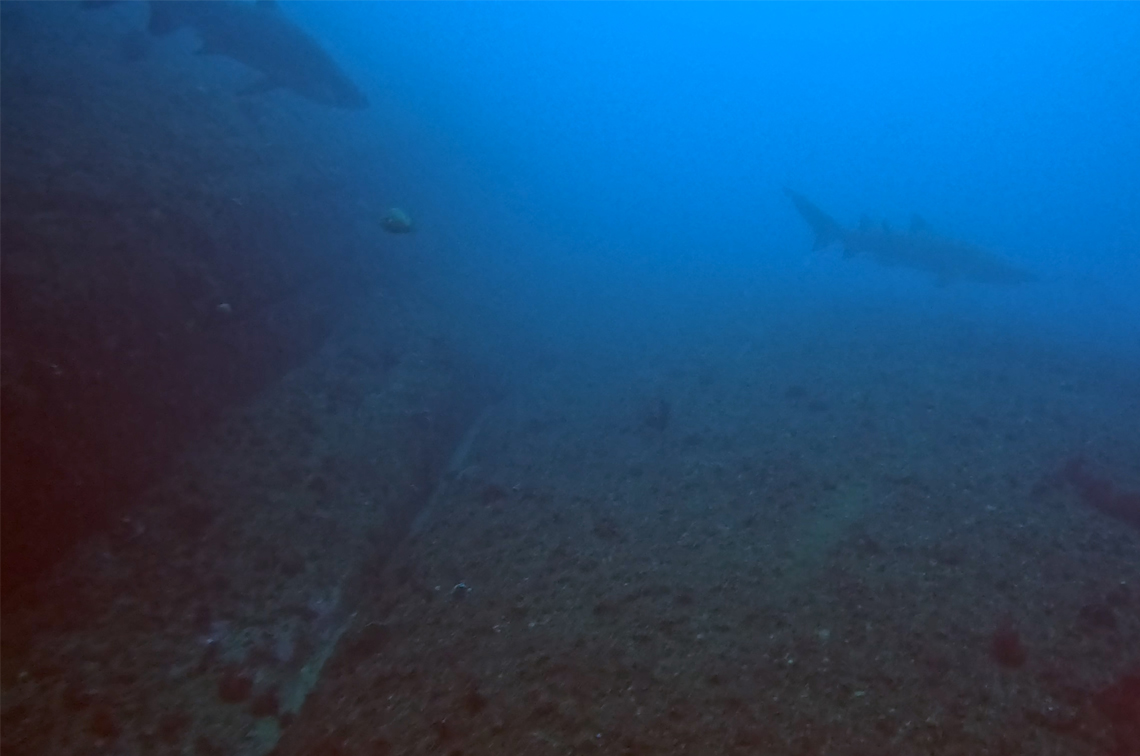
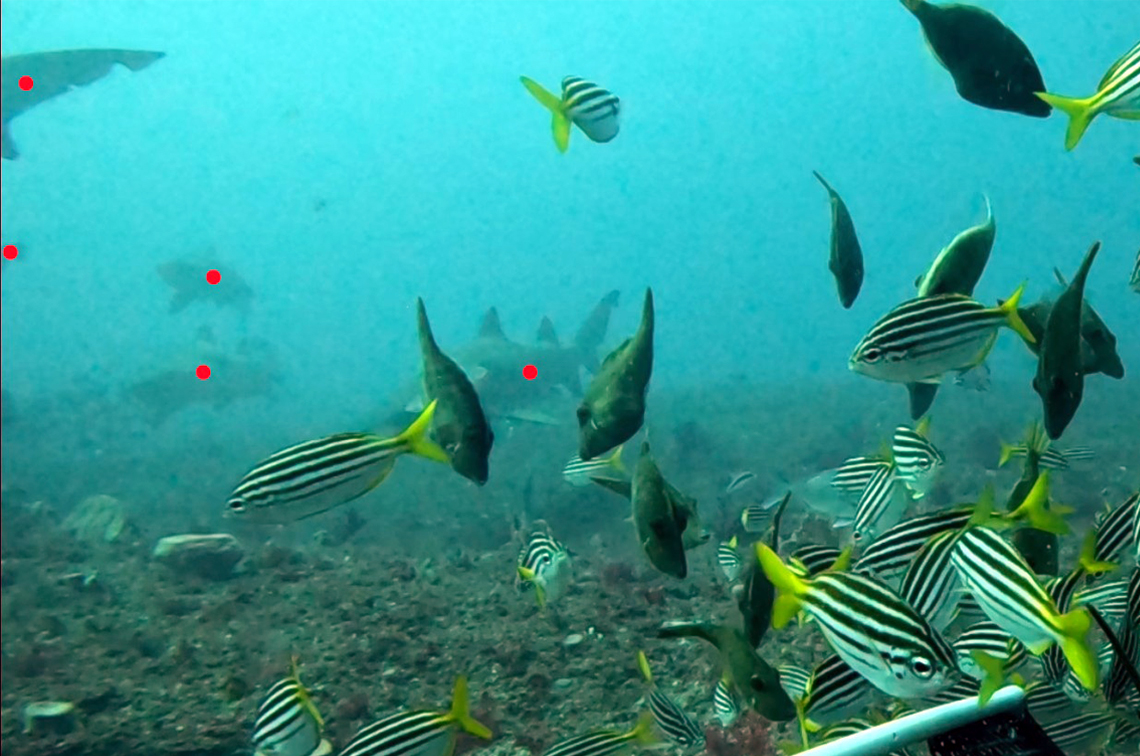
In Queensland, acoustic receiver coverage was extended at Barwon Banks off Mooloolaba. In New South Wales, underwater camera systems were used to record the presence of grey nurse sharks at the Outer Gibber Reef in the Hunter Marine Park.
The fieldwork program found several east coast aggregation locations that are not afforded the same levels of protection as the existing listed key aggregation sites.
“It was interesting to confirm the presence of grey nurse sharks at Outer Gibber Reef in the Hunter Marine Park,” Dr Harasti says. “We have had anecdotal information that they occur there, but we never had confirmation, although they are known to aggregate in the nearby state Port Stephens-Great Lakes Marine Park.”
In Victoria, surveys of potential grey nurse habitat off the coast of west Gippsland were undertaken using underwater camera systems and sampling for environmental DNA (eDNA). No grey nurse sharks were detected.
The project also supported training opportunities in the use of survey tools for Indigenous rangers in Victoria. This included ranger groups from the Gunaikurnai Lands and Water Aboriginal Corporation, Eastern Maar Aboriginal Corporation, and the Bunurong Land Council Aboriginal Corporation.
Changing definitions
The field work and information synthesis identified commonalities and assisted with developing a structured pathway to defining what constitutes a grey nurse shark aggregation site.
The new proposed definition is that a grey nurse aggregation site is a discrete area where two or more grey nurse sharks can be observed on a predictable basis (such as annually or seasonally) and that includes one or more behavioural drivers consistent with the BIA and ISRA frameworks. Where two or more grey nurse sharks occur at a site on a predictable basis, be it for feeding, breeding or resting, this would be the new criteria for calling it an aggregation site.
“Additionally, as the population continues to increase, it is envisaged that grey nurse sharks will aggregate at more locations,” Dr Harasti says. “This is currently being seen at NSW sites such as Jervis Bay, Port Stephens and Bushrangers Bay.
“The information provided in our project report shows what makes an aggregation for grey nurse shark and how the criteria can be applied for future assessments.”
Further information
In February this year ISRA released a compendium of 158 discrete areas of ocean habitat critical for the survival of sharks and rays across Australia and the Southeast Indian Ocean. These are available on the ISRA website.
Related stories

Media release
Slow increase in Australia’s eastern grey nurse shark population shows conservation actions are on track
Article
Black rockcod find refuge in ‘no-take’ zones amid overall population decline
Newsletter
The Blue Drummer Marine and Coastal Hub newsletter, June 2026
More stories