
Newsletter
5 December 2025
Welcome to the December 2025 Marine and Coastal Hub Offshore wind farm environmental research update. This issue features hub activities, government happenings, sources of knowledge and complimentary figures! We thank you for receiving our newsletter this year and wish you fair winds and following seas for the festive season and 2026.
Three hub projects on migratory shorebirds
Project 1.21 (completed) updated national trend analyses for 15 migratory shorebird species under conservation assessment.
Project 4.17 is creating an updatable dashboard of reproductive output and survival parameters for key shorebird populations and a handbook to guide practitioner management efforts in Australia and along the East Asian – Australasian Flyway (EAAF).
Project 4.26 is examining changes in migration timing and connectivity of Australian shorebird populations along the EAAF. The findings will contribute to disease response protocols, Highly Pathogenic Avian Influenza monitoring, and the prediction of shorebird migrations and potential virus transport into Australia.
Regional modelling and risk assessments project: the data collation continues
Hub project 4.7 led by CSIRO continues to develop whole-of-ecosystem and individual species modelling to estimate direct and indirect impact pathways associated with offshore wind-energy developments in the Gippsland region.
The past couple of months has continued to focus on collating a broad range of environmental data to support the modelling. This is intended to improve knowledge of priority species abundance and distribution, and understand key threats and cumulative risks that could result from offshore wind-energy developments and other existing (and future) activities and pressures.
The project is also starting to evaluate what monitoring objectives may be needed to (in)validate risk predictions. The project team includes the University of Tasmania, Curtin University and the Australian Institute of Marine Science.
How the hub aligns with the Renewables Environmental Research Initiative (RERI)
The hub and the Department of Climate Change, Energy, the Environment and Water have produced a fact sheet outlining how the RERI and the hub align. In short, both initiatives are funded by the Australian Government.
The RERI takes a targeted approach, supporting regulators and industry with research to reduce environmental uncertainties for renewable energy projects. The hub has a broader scope, using applied science to support governments, communities, and researchers in sustainable marine and coastal management. Together they strengthen Australia’s ability to balance renewable energy development with marine and coastal ecosystem stewardship.
ARDC project to build trusted environmental data and information supply chains
A project funded by the Australian Research Data Commons (ARDC) is establishing data, analytics and governance infrastructure to support evidence-based environmental impact assessment for the Gippsland offshore renewable energy declared area.
The project is led by the Institute of Marine and Antarctic Studies, University of Tasmania. Other research partners include the Marine and Coastal Hub, the Western Australian Marine Science Institution, the Integrated Marine Observing System, and the Australian Ocean Data Network. They are taking a collaborative approach to creating a resource that meets the needs of government, research and industry.
See the Offshore renewable energy trusted environmental data and information supply chains project on the ARDC website.
Australian offshore wind energy happenings
In August . . . The Australian Government invited public consultation on the draft guidelines for Research and Demonstration licences for offshore renewable energy projects.
In September . . . The Australian Government announced temporary cost reductions for industry to invest in feasibility activities, and the Victorian Government pushed back the anticipated auction process for offshore wind companies in Gippsland until at least the end of 2025.
Tethys knowledge hub
Wading through the daily release of research and information about offshore renewables to find the knowledge you need can be tough. The Tethys knowledge hub is an invaluable resource sponsored by the United States Department of Energy. It hosts thousands of searchable documents and information about the environmental effects of offshore renewable energy, a calendar of events, standardised data management and visualisation tools, and educational resources.
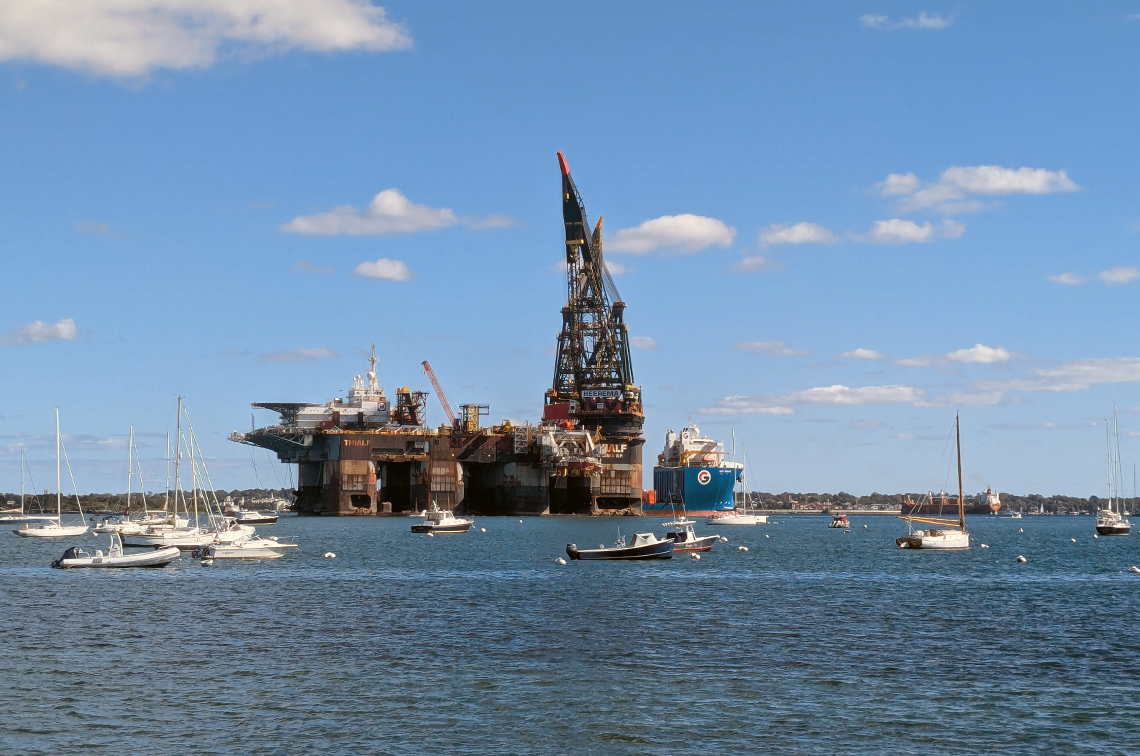
Floating offshore wind farm environmental considerations: NSW case study
A journal article by lead author Rachel Przeslawski and colleagues published in Marine and Freshwater Research in October provides a first step in understanding the potential environmental impacts of floating offshore wind farms in Australia. The article is titled ‘Environmental considerations related to floating offshore wind farms: a case study from waters around New South Wales, Australia’. It reviews information on regional environmental baselines for key receptors and characterises how environmental impact pathways identified by the Australian Government may apply to floating offshore wind farms. It concludes that the greatest challenge to impact assessment in Australia is the scarcity of local environmental information, particularly regarding species distributions and ecosystem functions in deeper marine environments.
Complimentary figures
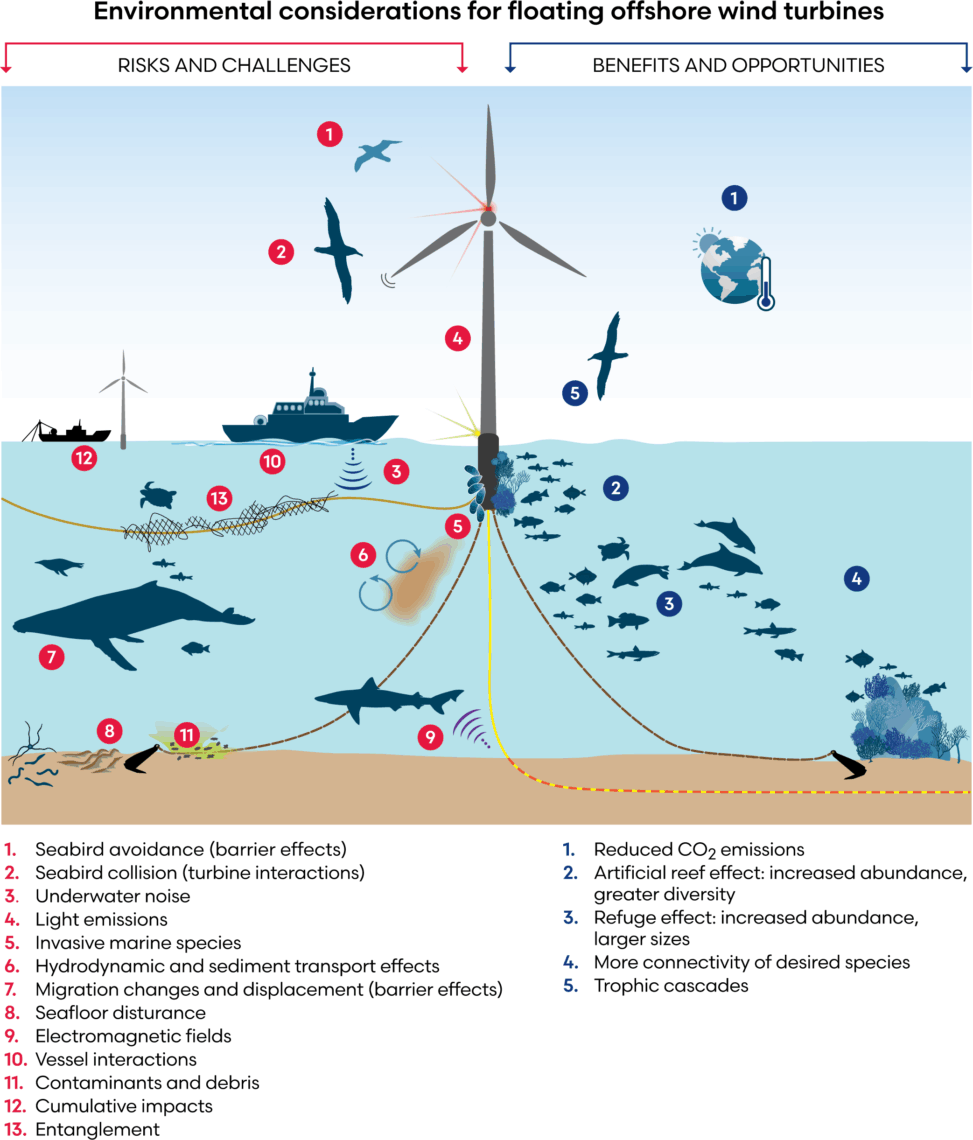
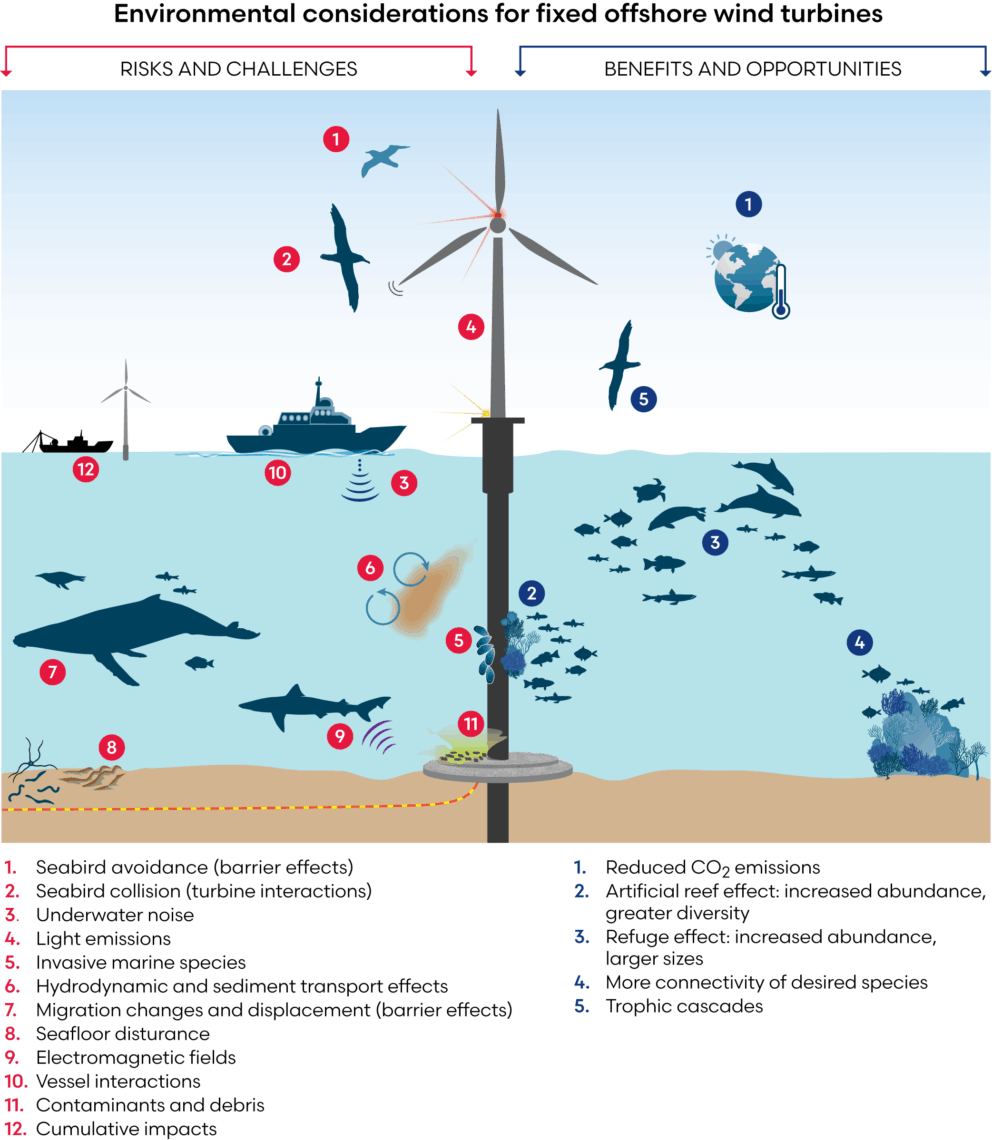
Following on from this paper, the authors have developed the two figures below that illustrate the risks and challenges, and the benefits and opportunities associated with floating and fixed offshore wind turbines. The figures are available for download from the imagery catalogue on the hub website. When reusing the figures, please caption and credit them as advised on the download pages.
- Environmental considerations for floating offshore wind turbines
- Environmental considerations for fixed offshore wind turbines
Related stories
Newsletter
Marine and Coastal Hub offshore wind farm environmental research update, March 2026
Newsletter
Marine and Coastal Hub offshore wind farm environmental research update, September 2025
Article
Workshop bridges knowledge and expertise to support offshore wind farm environmental assessment
More stories