Article
31 August 2026
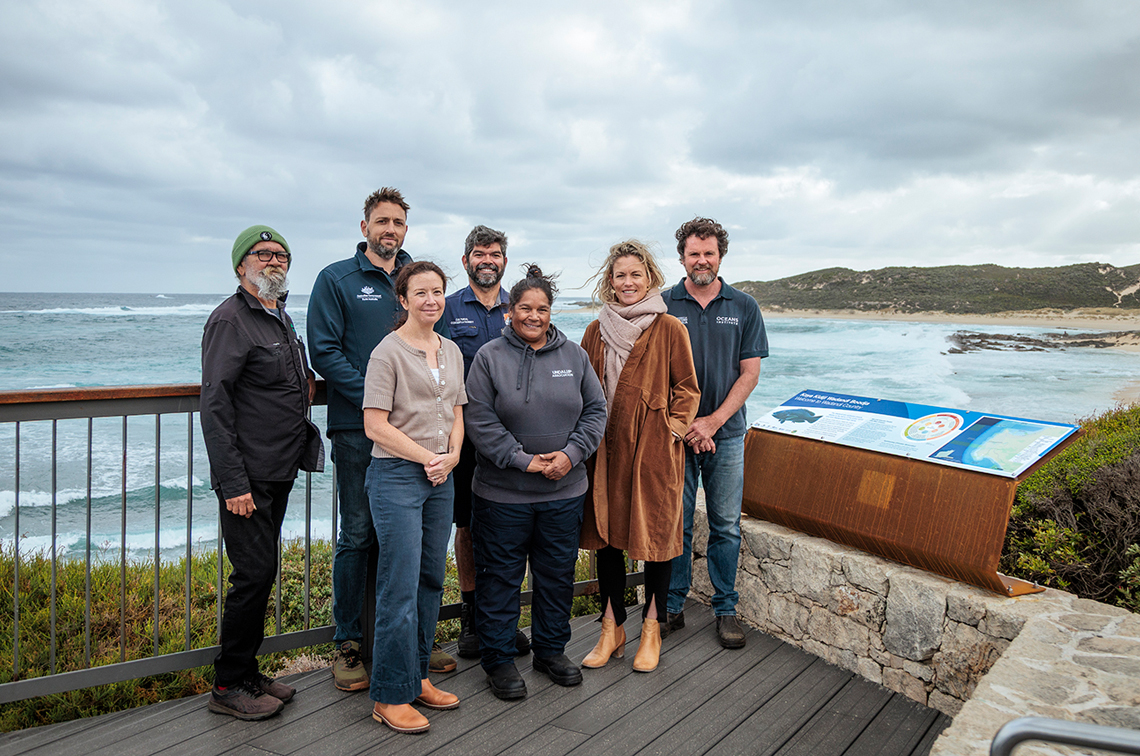
Cultural interpretive signage installed at Margaret River, WA, in June this year celebrates Wadandi culture, stories and connection to Country on Wadandi Boodja (Saltwater People’s Country).
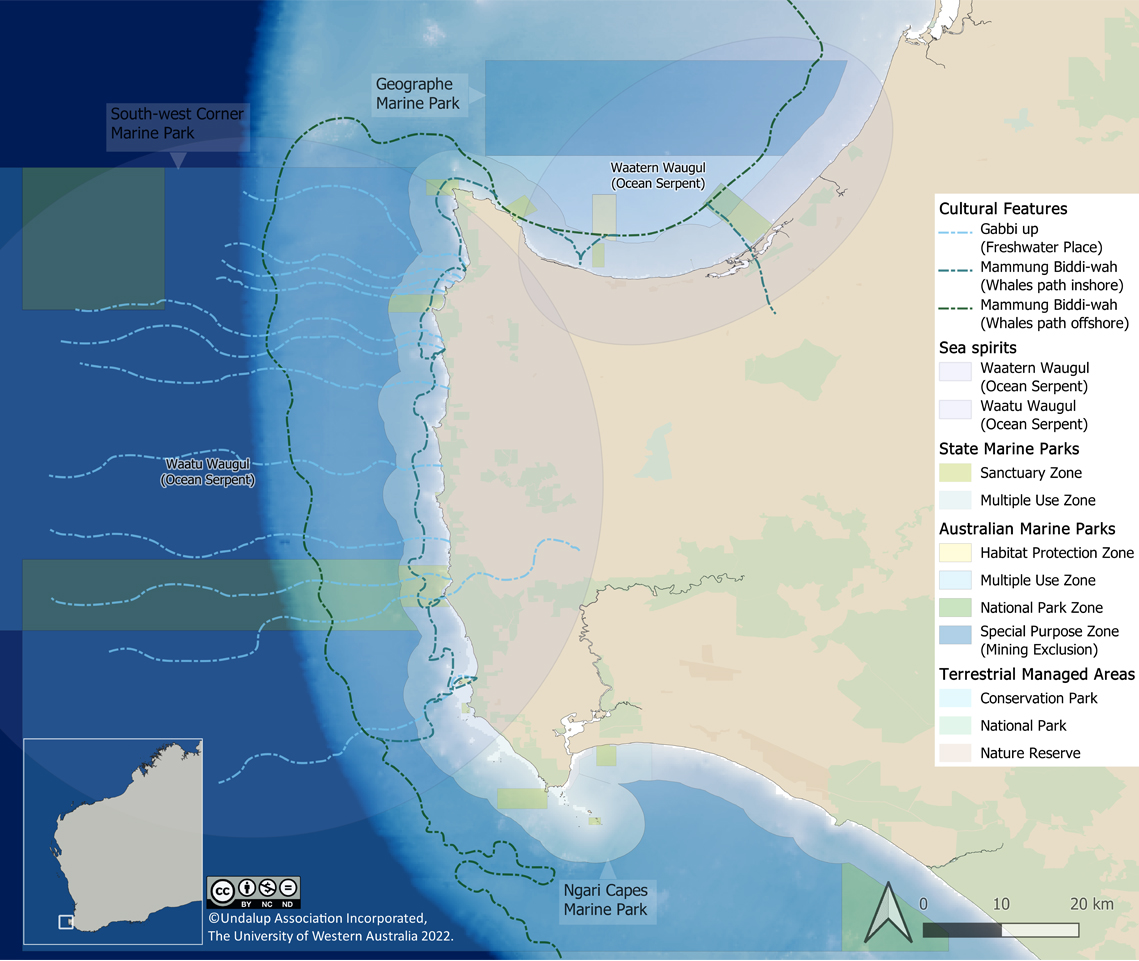
The Surfers Point signage includes a map of the Wadandi cultural seascape developed by Wadandi Traditional Custodians working with researchers from the Marine Biodiversity Hub (a forerunner of the Marine and Coastal Hub).
Wadandi Traditional Custodians Dr Wayne ‘Wonitji’ Webb and Zac ‘Waalitj’ Webb of Waalitj Wongi led the initiative to install the signage. They worked with the Shire of Augusta Margaret River and partners including Parks Australia, the University of Western Australia and the Marine and Coastal Hub.
The Wadandi cultural seascape map depicts totem areas, cultural features, and Songlines reaching far out into the ocean. The extensive shared knowledge of submerged landscapes guided biodiversity surveys in Australian Marine Parks (Geographe and South-west Corner marine parks).
These surveys identified ancient riverbeds and shorelines, highlight the interconnection between land, freshwater and saltwater systems, and helped researchers understand that, from a Wadandi perspective, there is no line between land and sea.
Visitors to Surfers Point are invited to walk the boardwalk, view each sign and look out across the ocean, connecting the Songlines to the surrounding coastal landscape.
Shire President, Julia Jean-Rice, said the shire was proud to support the project and the sharing of Wadandi culture and stories in a respectful and accessible way.
“These signs provide residents and visitors with an opportunity to learn more about Wadandi culture, language and connection to Country while experiencing one of the Shire’s most iconic coastal locations,” she said.
Dr Wayne ‘Wonitji’ Webb said the project encourages people to slow down, observe and listen to Country.
“Whilst living, travelling, visiting and holidaying on Wadandi Boodja, we ask people to walk softly on Country and take the time to listen to Boodja as she/Wongi (Talks),” he said.
Wadandi Traditional Custodian Zac ‘Waalitj’ Webb said the stories help connect people to place.
“These stories have been passed down through generations and are deeply connected to the coastline, ocean and seasons. Sharing them helps people understand the cultural significance of this place and the importance of caring for Wadandi Boodja as one continual cultural seascape,” he said.
“The signs also feature Ngari Koondarmung (Salmon Dreaming) by my grandmother Wadandi Matriarch Vilma Webb, reflecting the deep connection between seasons, culture and Country.”
Wadandi Traditional Custodian Zac ‘Waalitj’ Webb
Hub project leader Dr Tim Langlois of the University of Western Australia said the knowledge shared by Cultural Custodians has helped researchers interpret observations from biodiversity surveys.
“We’ve been able to follow the path of the Margaret River out to the 125-metre depth contour where we found the old shoreline from the last glacial period, when Traditional Owners would have been walking that land and managing that land,” he said.
“Seeing submerged geological formations such as ancient headlands through the eyes of Cultural Custodians has helped us understand the patterns of marine life that we see, and why appreciating these old coastlines is so important.”
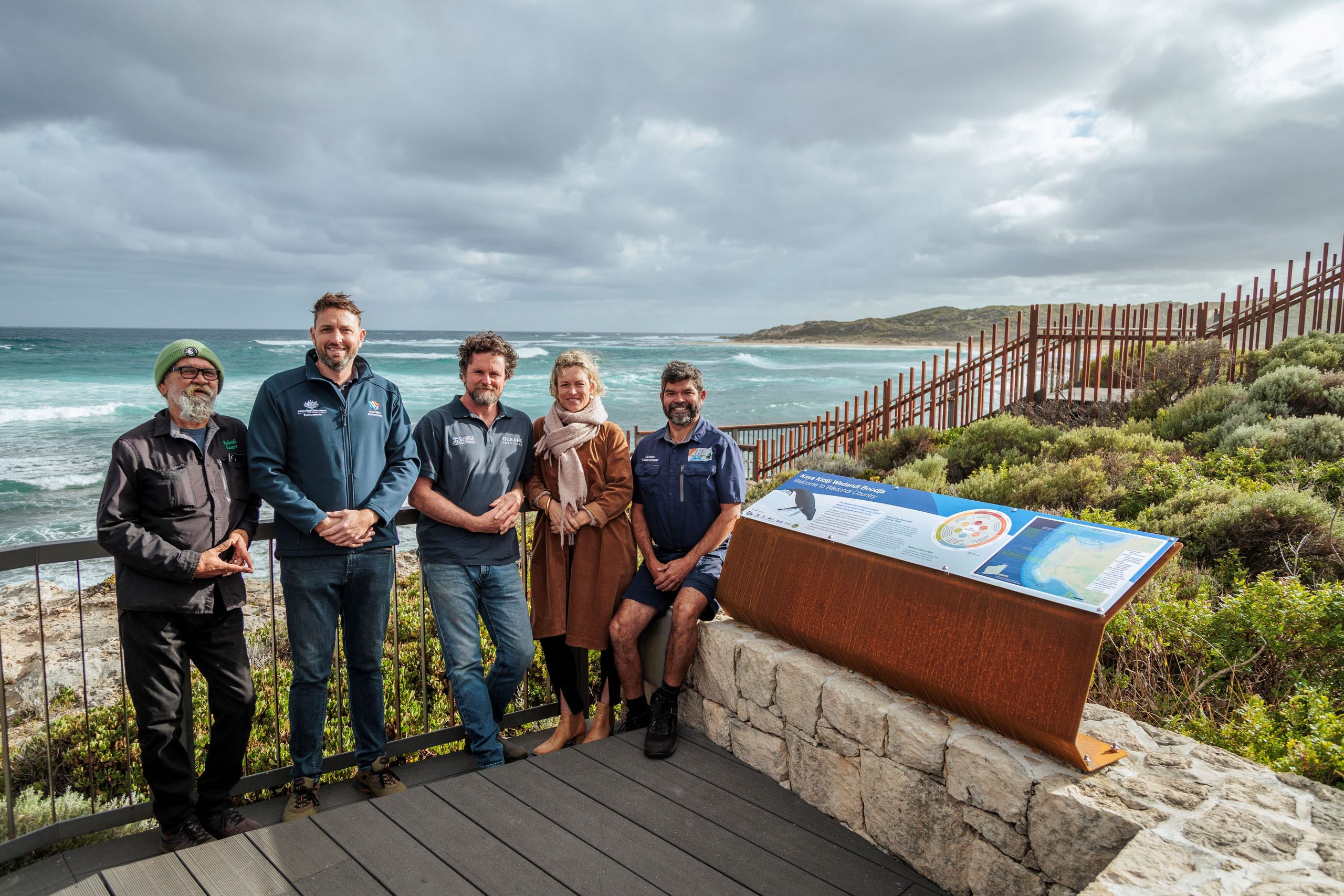 Dr Wayne ‘Wonitji’ Webb of Undalup Association, Ben Walley of Parks Australia, Dr Tim Langlois of the University of Western Australia, Shire of Augusta Margaret River President, Julia Jean-Rice, and Zac ‘Waalitj’ Webb of Waalitj Wongi. Image: Shire of Augusta Margaret River
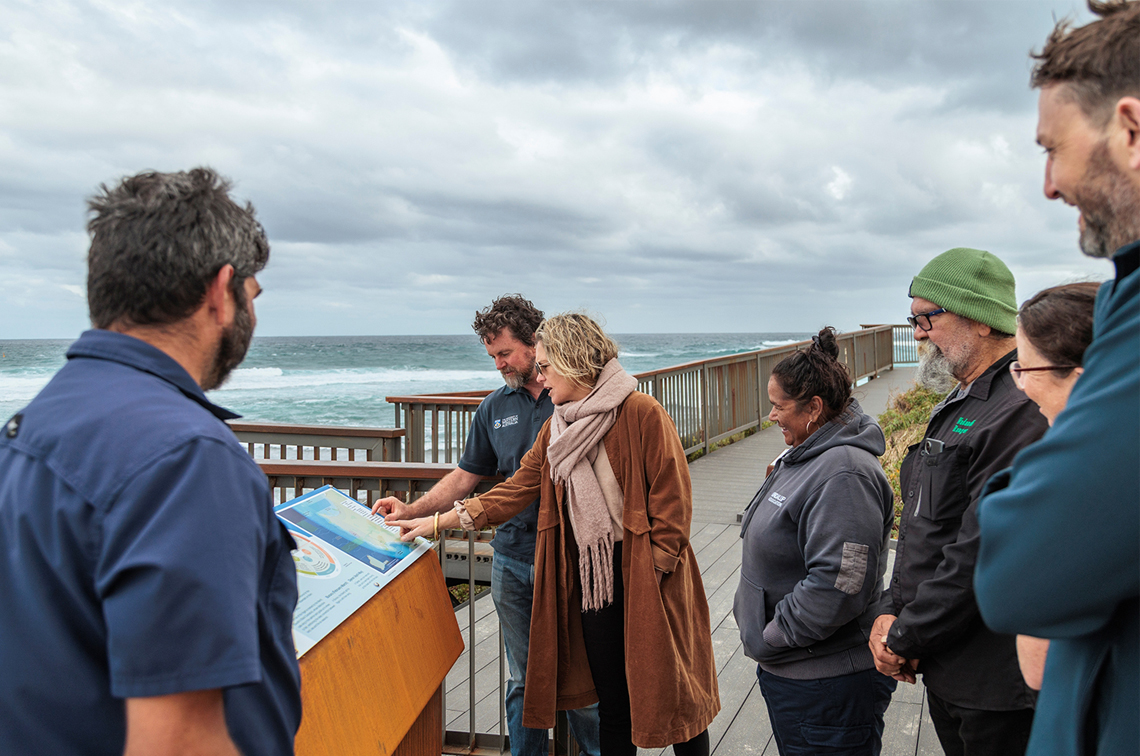 Zac ‘Waalitj’ Webb of Waalitj Wongi, Dr Tim Langlois of the University of Western Australia, Shire of Augusta Margaret River President, Julia Jean-Rice, Kaylene Gray of Undalup Association, Dr Wayne ‘Wonitji’ Webb of Undalup Association, Hayley Bain of Shire of Augusta Margaret River and Ben Walley of Parks Australia. Image: Shire of Augusta Margaret River
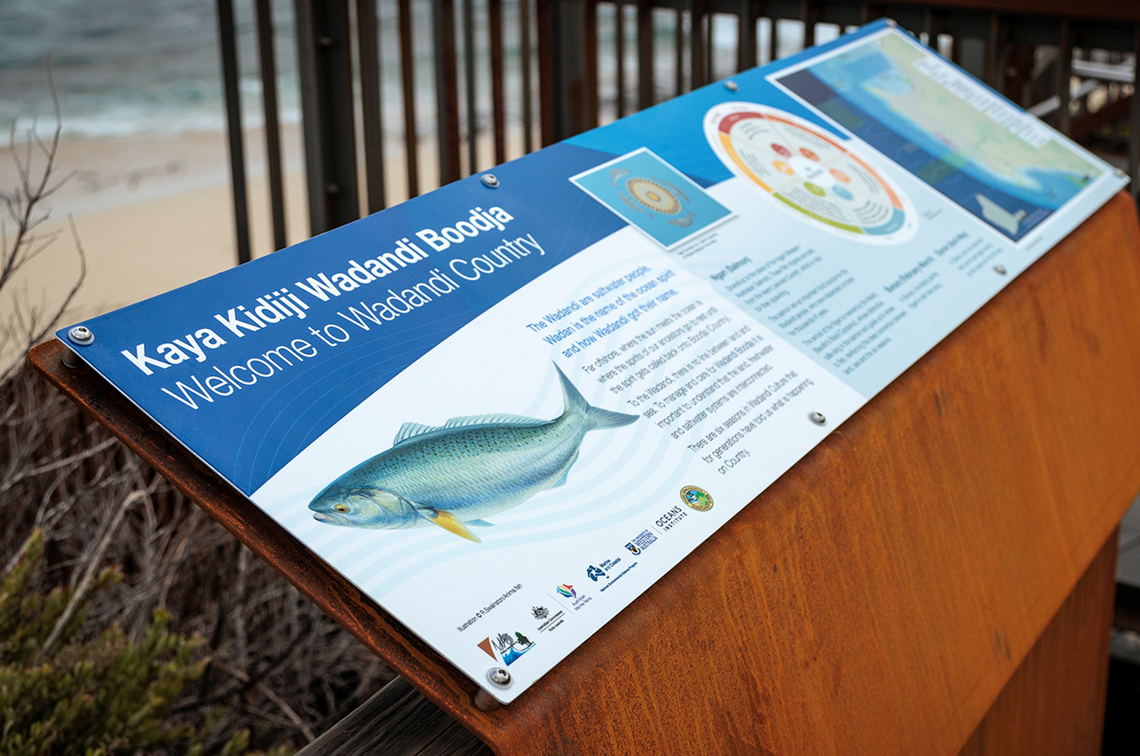 The signs provide residents and visitors with an opportunity to learn more about Wadandi culture, language and connection to Country. Image: Shire of Augusta Margaret River
Further information
- Learn more about this project’s inspiration: Guiding surveys on Wadandi Saltwater Country: Video on Vimeo
- The cultural seascape of Wadandi Boodja: The cultural values of Australia’s South-west Marine Parks. Marine Biodiversity Hub report