Article
14 March 2026
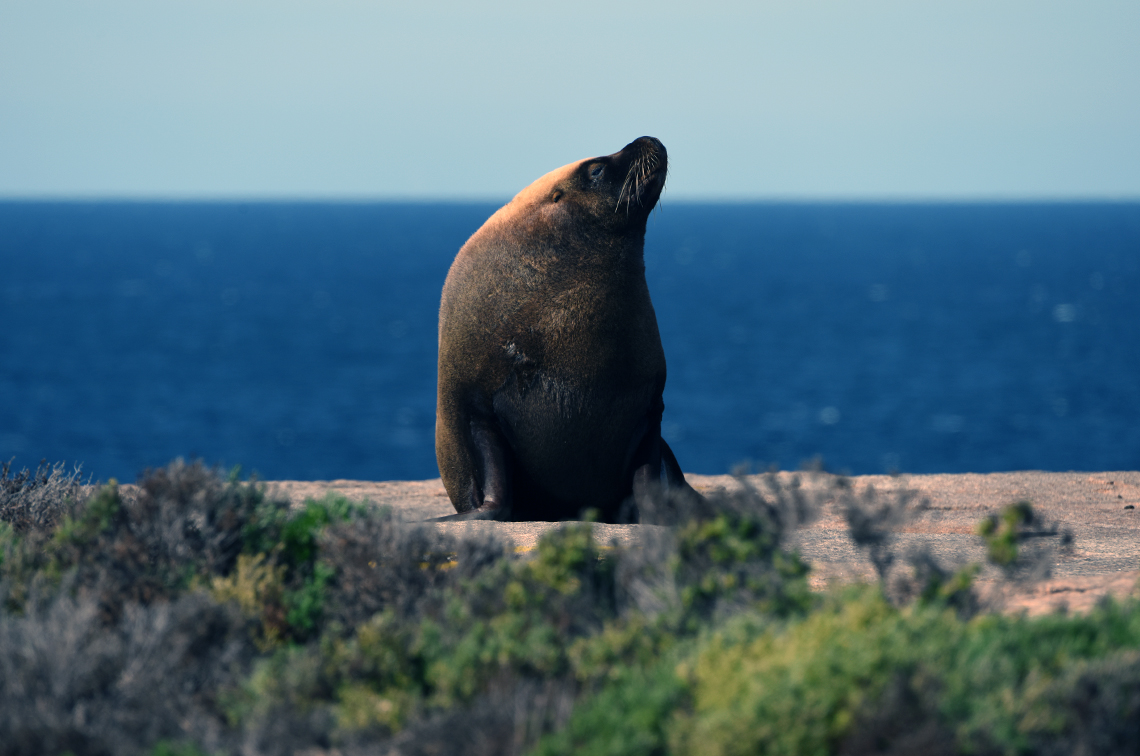
Helicopters and drones are being used for the first time to survey Australian sea lion breeding colonies on the gnarly islands of Recherche Archipelago off Kepa Kurl (Esperance), Western Australia. It’s a step back in time for the project’s Wudjari participants.
The Esperance Tjaltjraak Native Title Aboriginal Corporation (ETNTAC) and the Western Australian Department of Biodiversity, Conservation and Attractions (DBCA) have been conducting collaborative surveys at the islands since 2024.
They're laying the foundation for ongoing monitoring by aligning their survey methods and timing with the conditions at each island colony. The monitoring will support new population estimates, which have not been consistently updated in Western Australia for several years.
The collaborative research is part of a Marine and Coastal Hub project that is also conducting surveys in South Australia, developing techniques to analyse and process demographic data, and fitting cameras to sea lions to identify critical habitats.
The project findings will contribute new understanding to help assess threats, and guide and evaluate conservation management and recovery actions for Endangered Australian sea lion populations which have declined 60% in the past 40 years.
A collaborative model
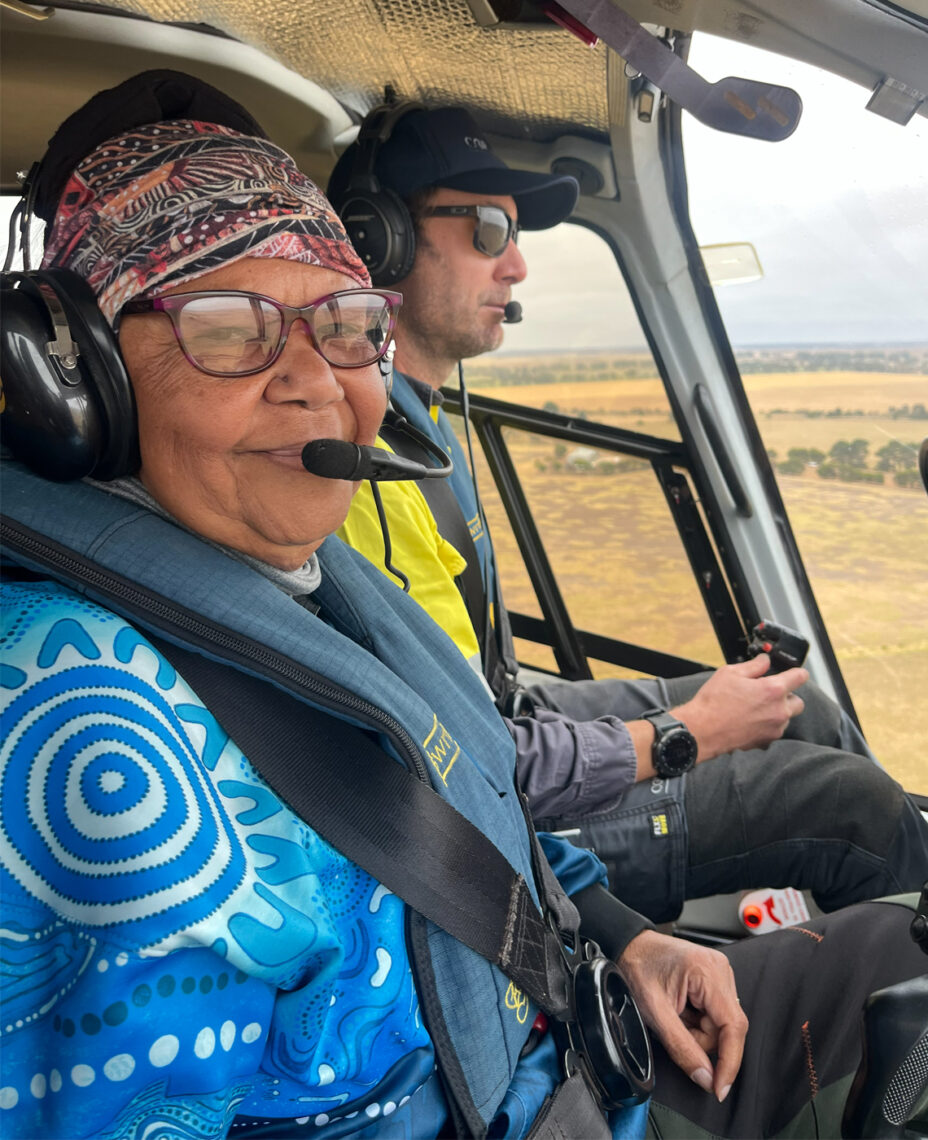
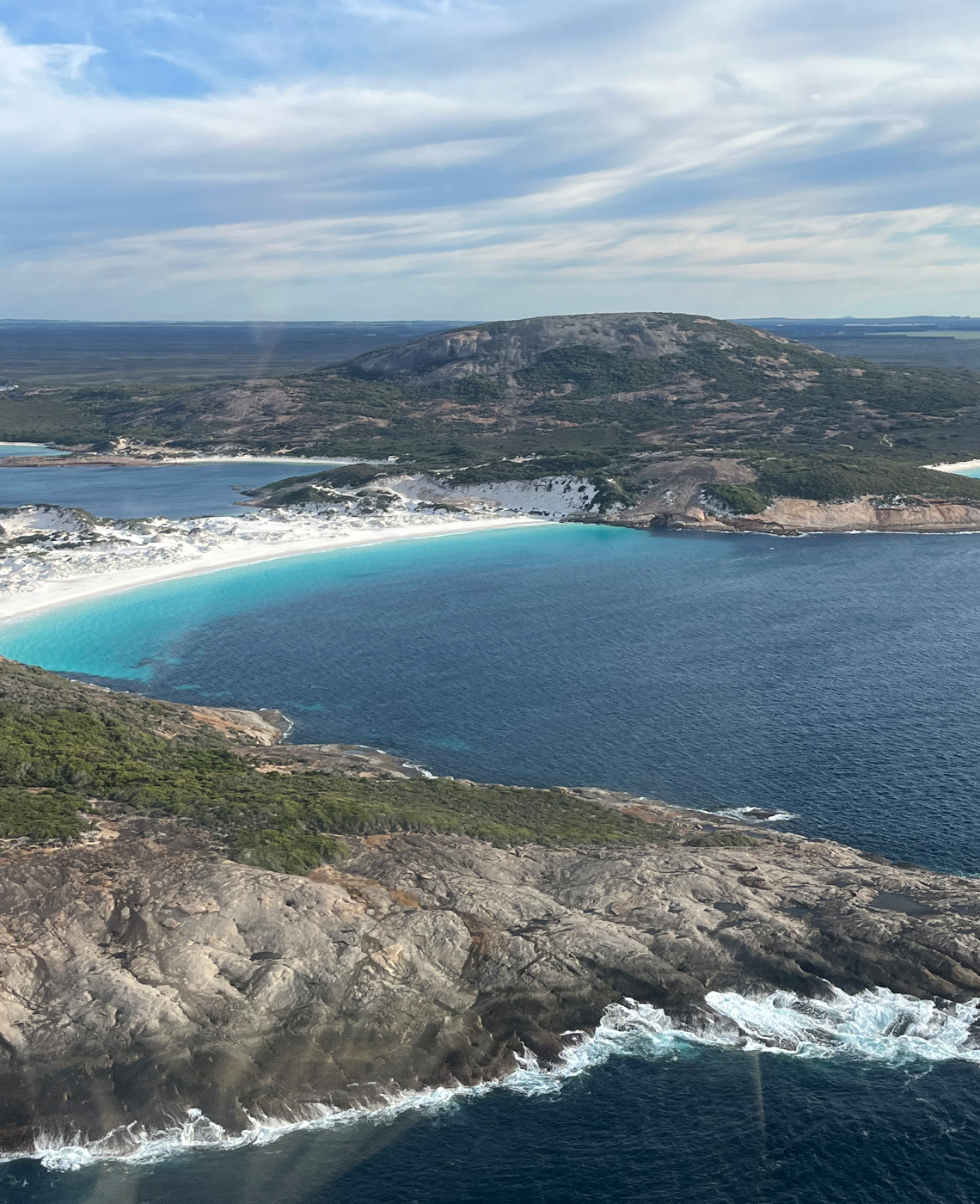
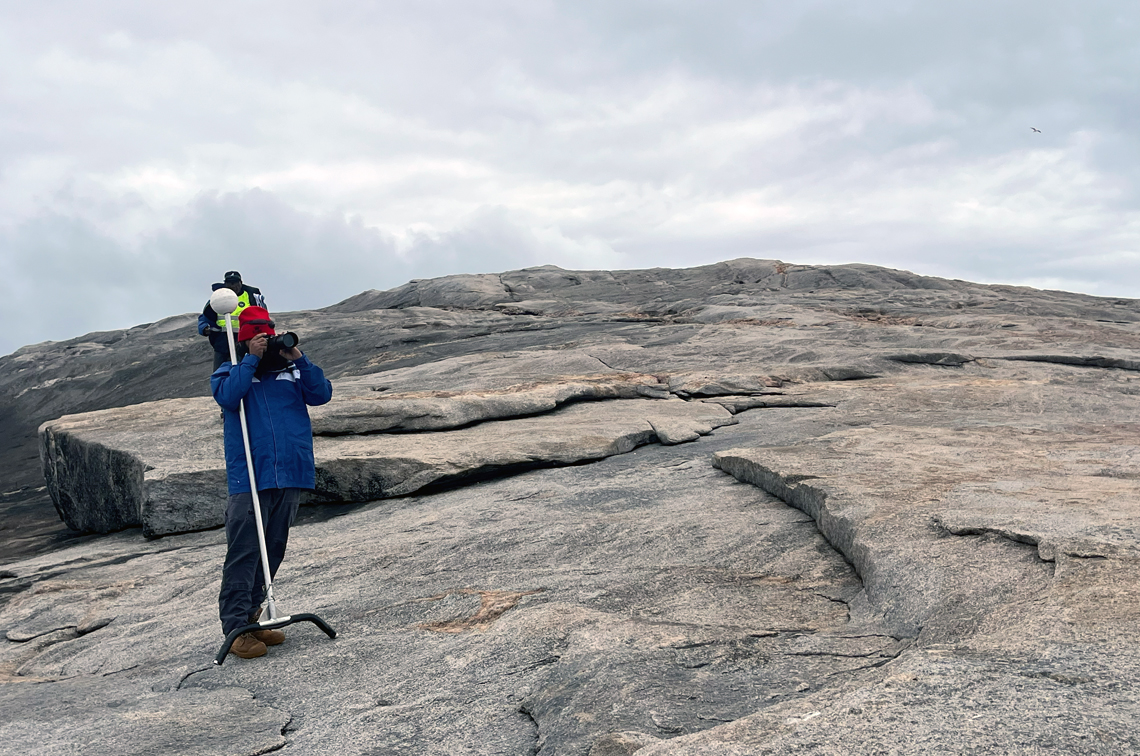
About 35% of Western Australia’s sea lion breeding colonies reside at the Recherche Archipelago. Many of the islands here are difficult to access due to the swell and steep granite, so the survey team travels by helicopter. From the air, they take photos and record data of the breeding colonies. Once on site, they conduct ground counts and collect drone imagery if the weather allows.
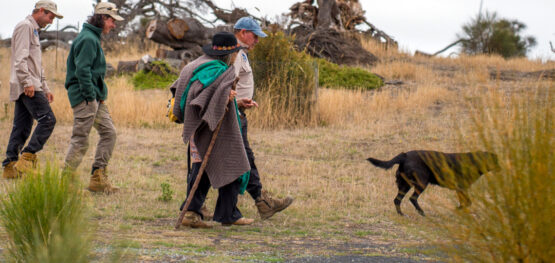
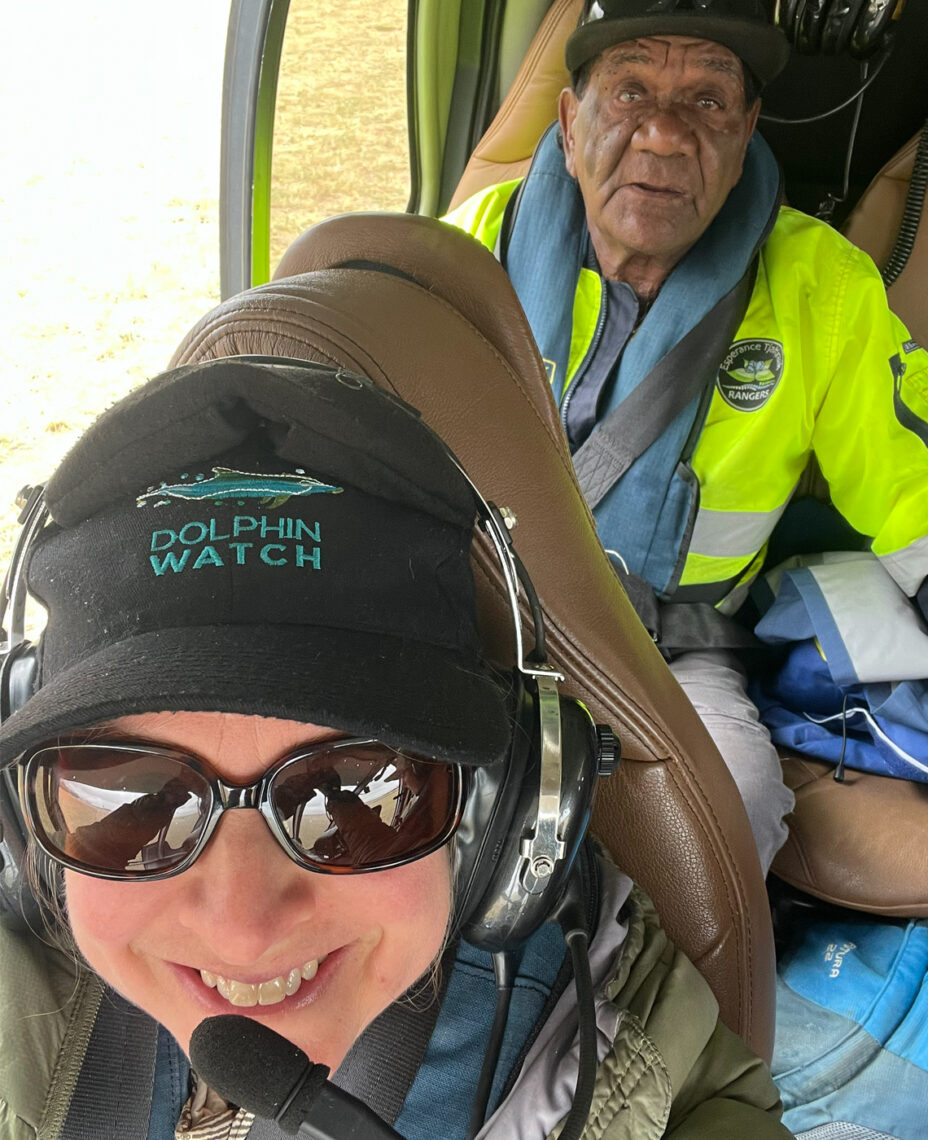
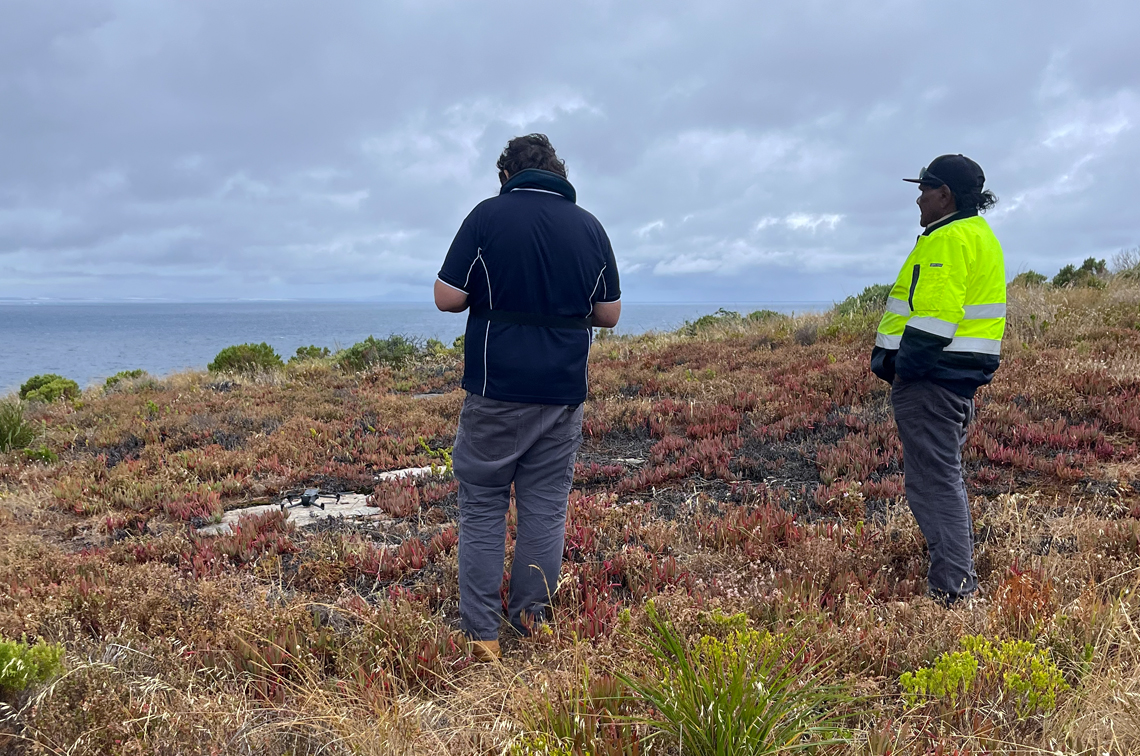
Each survey involves a ranger and a senior cultural advisor from ETNTAC, and a DBCA representative. Rangers pilot the drones and plan their flight paths, and senior cultural advisors contribute cultural knowledge in the field. DBCA provides science support.
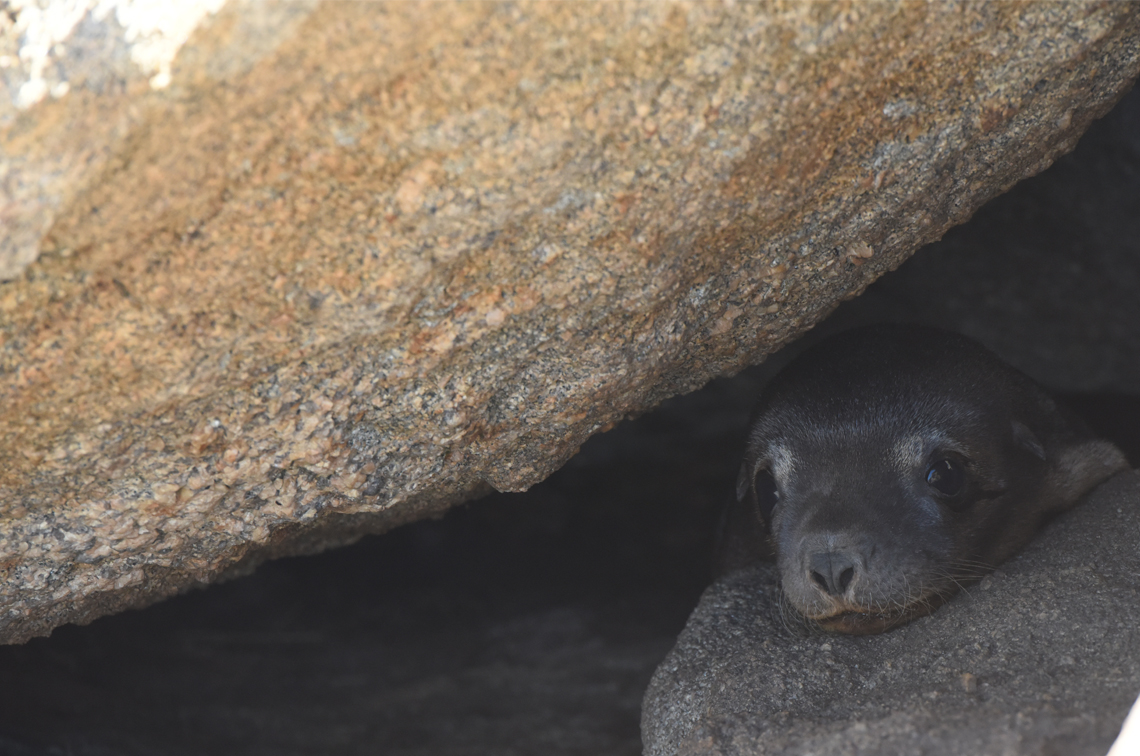
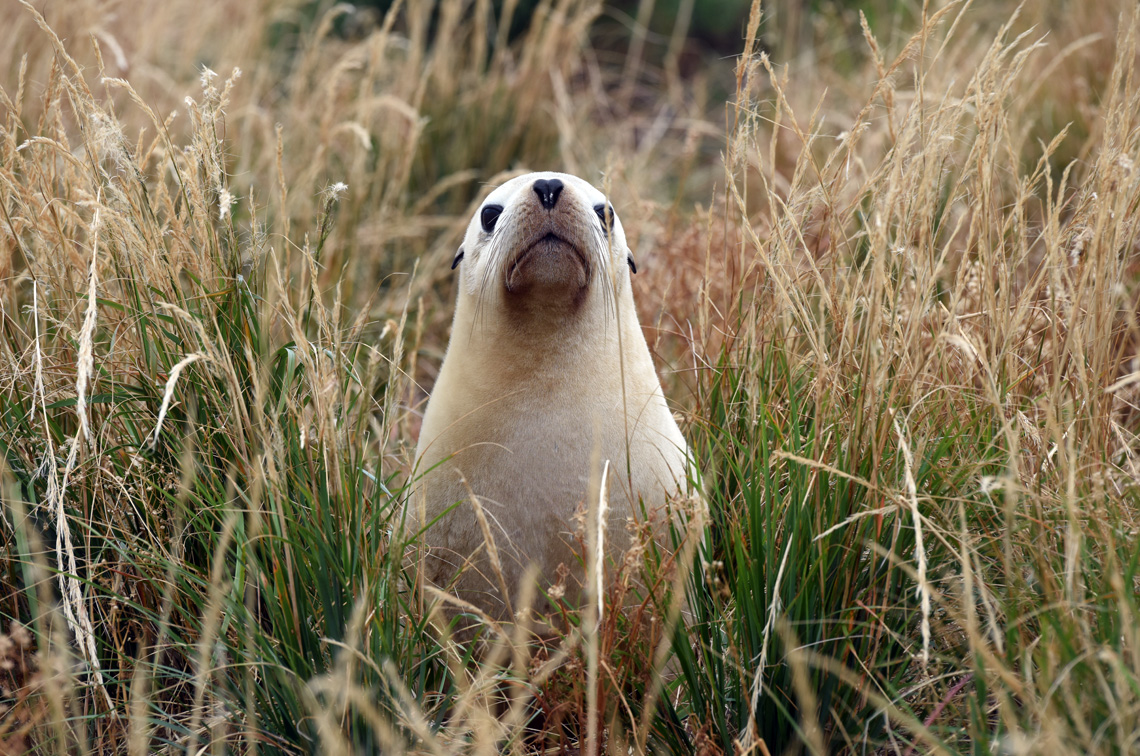
The team’s mission is to count the pups. They can determine the stage of the breeding cycle by identifying the color of the pups’ coats. Newborns are almost black and within a few weeks they turn brown; when fully moulted, they become pale silvery and ready to disperse.
The surveys also annotate sea lions’ sex (male or female) and age classes, which is useful for understanding the timing of the breeding. For example, bulls guarding cows are likely to be waiting for the opportunity to mate after the female has pupped.
Dr Holly Raudino, senior research scientist at the DBCA marine science program and hub project leader, says the use of helicopters has been a game changer. “We’ve been able to safely access the islands in rough sea conditions that are not suitable for boating,” she says.
The project has also enabled Traditional Custodians to access islands that their community hadn’t seen in a long time.
Henry Dabb, a Traditional Owner of Wudjari Country and one of the cultural advisors for this project, says they have found artifacts of cultural importance in the island colonies such as lizard traps and gnamas, which are holes in granite rocks used for collecting water.
“There's culture still on those islands,” ETNTAC Healthy Country Program Coordinator Jennell Reynolds says. “That's why cultural advisors are out there not just checking the sea lions, but the cultural features.”
Challenges in the field
Australian sea lions have an unusual breeding cycle that makes them more vulnerable to threats and challenging for surveying. Unlike other seals which give birth annually, this species breeds every 18 months and at different times across colonies, even if they are close to each other.
“Given the colonies in Western Australia haven’t been surveyed every breeding cycle, we have lost track of when reproduction occurs,” Dr Raudino says. “One of our objectives with this project is to reconfirm those breeding schedules, so we can monitor at the right time going forward.”
The project is also testing the use of drones for monitoring. Researchers have deployed drones on three of four surveys so far, and identified a few challenges. For example, they can’t fly drones in strong winds, and when sea lions and fur seals are pupping together in the same colonies, it can be difficult to tell the two species apart in the imagery.
Their preliminary results suggest this method is very site specific. While suitable for some colonies, it would need to be combined with others (helicopter surveys and ground counts) to guarantee effectiveness across all sites.
Proof of this finding was the survey at Taylor Island in November last year. The counts from drone imagery yielded about six individuals. With the ground count the team couldn’t find many pups, and when they flew over in helicopter, they saw comparable numbers to the drone.
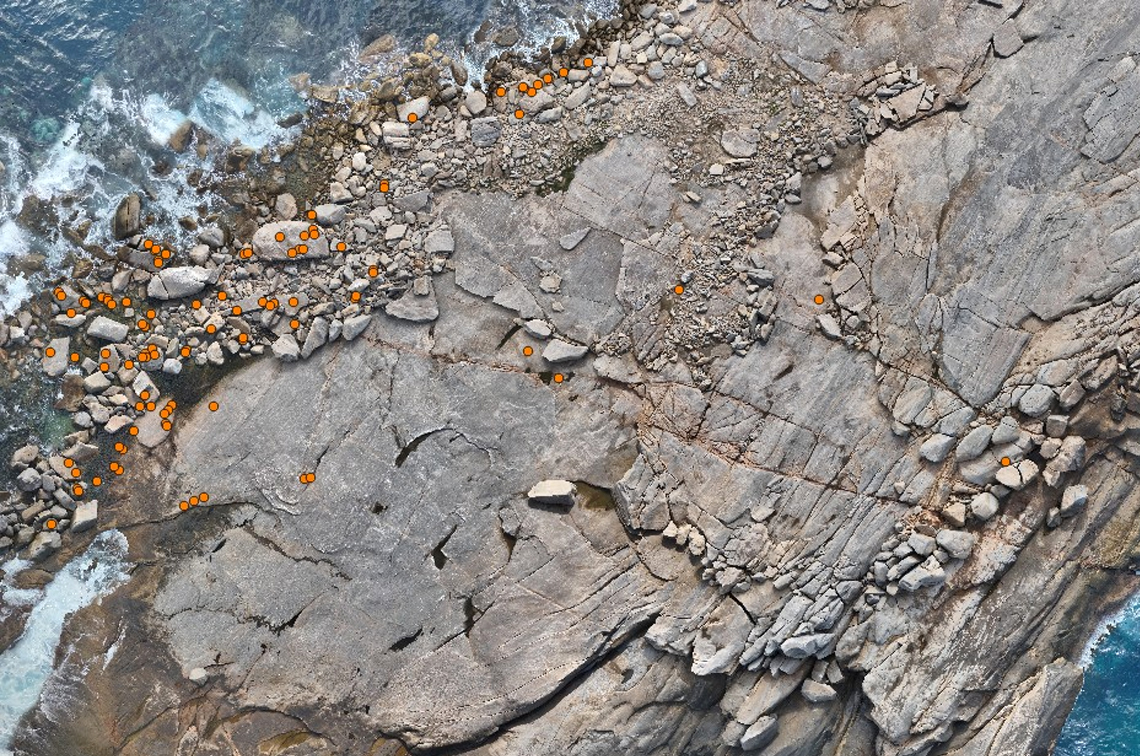
A glimpse of the counts
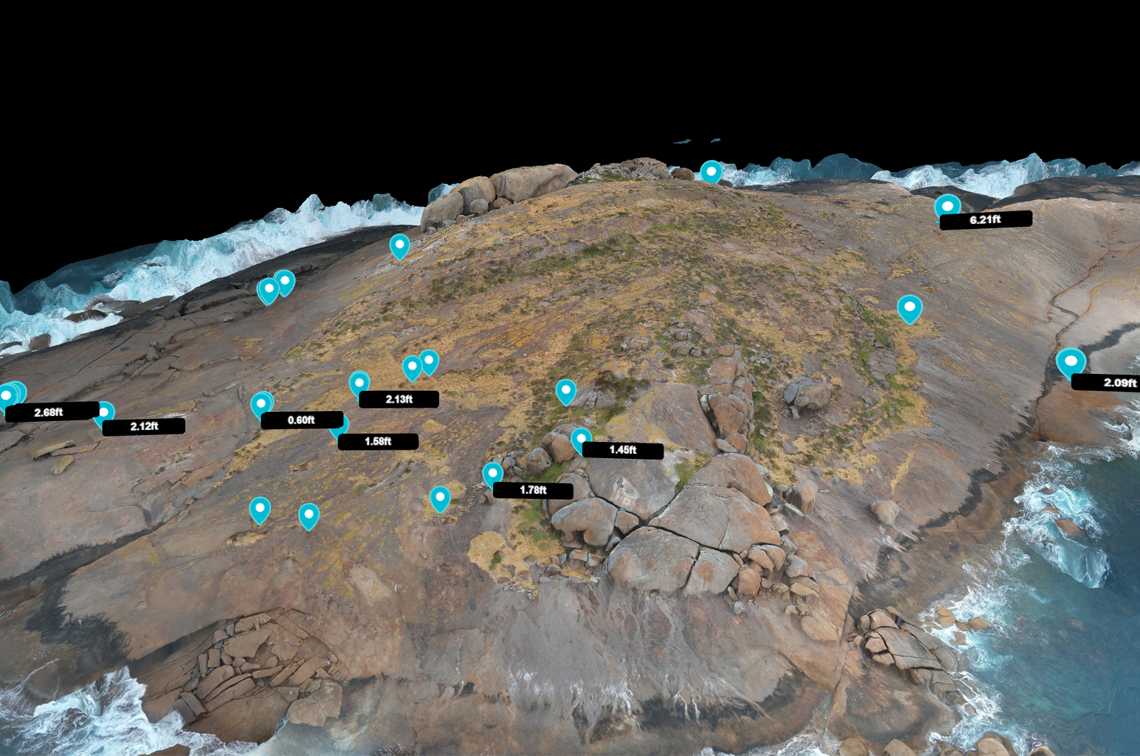
The team has surveyed more than 20 islands and produced several orthomosaics, which are high quality maps made up of multiple small drone images featuring sea lions.
Preliminary findings are available for five of the islands. The counts on Glennie, Taylor and George islands are comparable to previous surveys and historical numbers, while at Wickham and Kimberley the pup counts were low.
The most recent survey, in February this year, aimed to confirm if those low numbers were truly low or too early in the breeding season. In Kimberley, the survey yielded higher numbers than in November, which was promising.
Reassuringly, the team spotted pupping at Spindle Island, an event that hasn’t been recorded in about 35 years. Now they are processing the data (raw numbers) to provide an updated population estimate for WA and other findings in a report later this year.
“Population size estimates will be used to tell whether the population is recovering or not,” Dr Raudino says. “Low counts could be used to identify where intervention is needed.” In this way, the project contributes to the management of Wudjari Marine Park and Western Bight Marine Park.
The ETNTAC team will share the findings with Wudjari Elders and the broader community. It is expected that monitoring continues forward with this corporation, as the DBCA enters a formal joint management partnership of Wudjari Marine Park.
“It's really important to work together for the future of the species,” Jennell Reynolds says. “As Custodians of the land, we want to educate our community in how to protect and look after sea lions.”
Acknowledgement
The following ETNTAC members have contributed to this project:
- Donna Beach and Henry Dabb: senior cultural advisors.
- Hayleigh Graham and Jeremy Smith: rangers and drone pilots.
- Lachlan Adamson: ranger, drone pilot and author of orthomosaics.
- Kynan Nelson: ranger and drone pilot in training.
- Maddison Riley and Trevor Dimor: rangers who participated in the first survey (August 2024).
- Jenn Lavers (former ETNTAC employee): Healthy Country Program Coordinator for the first survey (August 2024).
- Doc Reynolds: senior cultural advisor in May 2025 survey of Glennie Island.
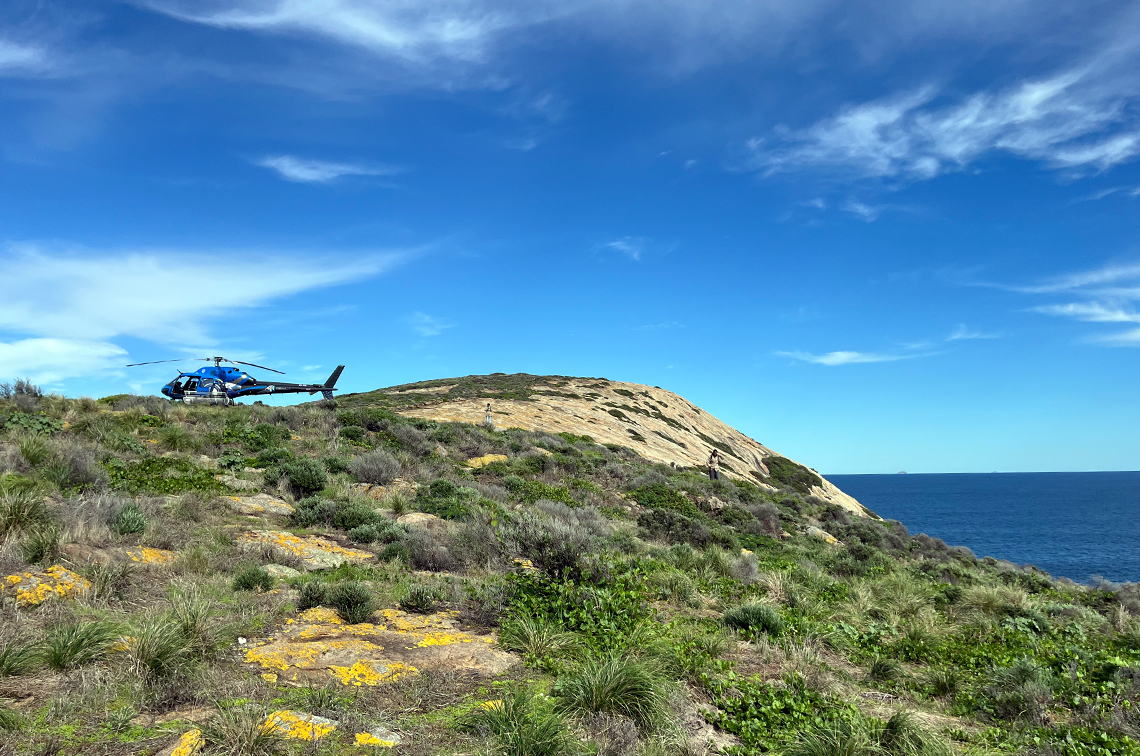 A Corsaire Aviation helicopter at work. Image: DBCA
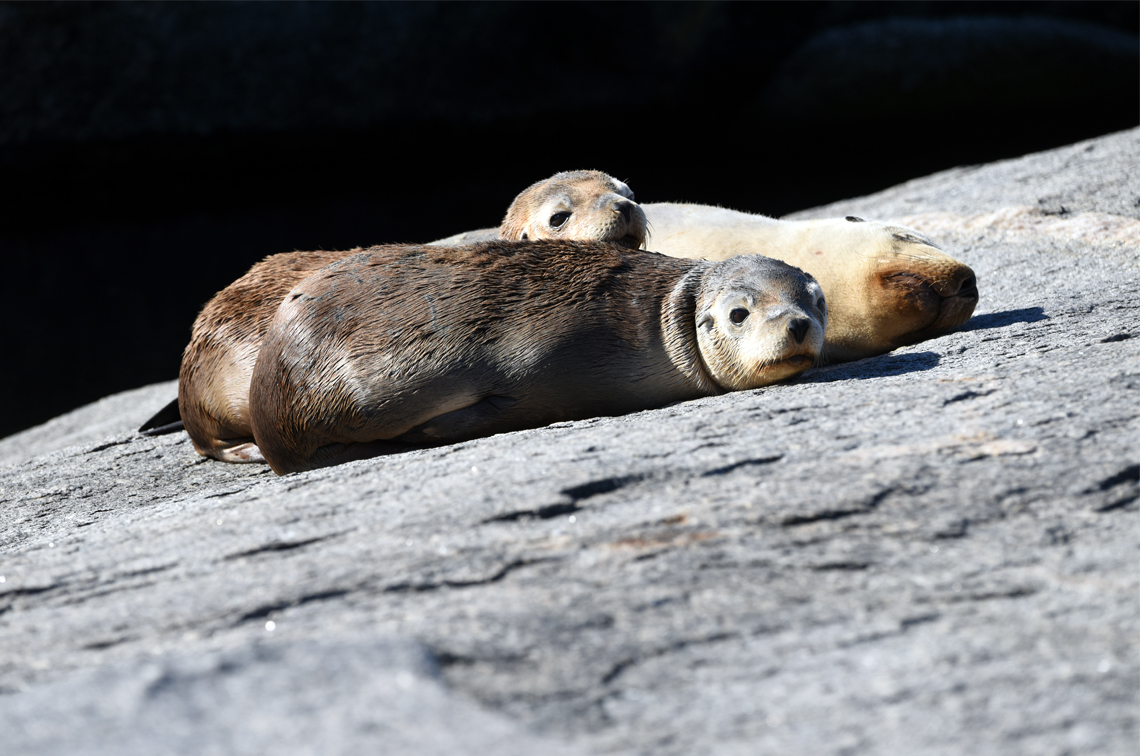 Snoozing in the sun. Image: DBCA
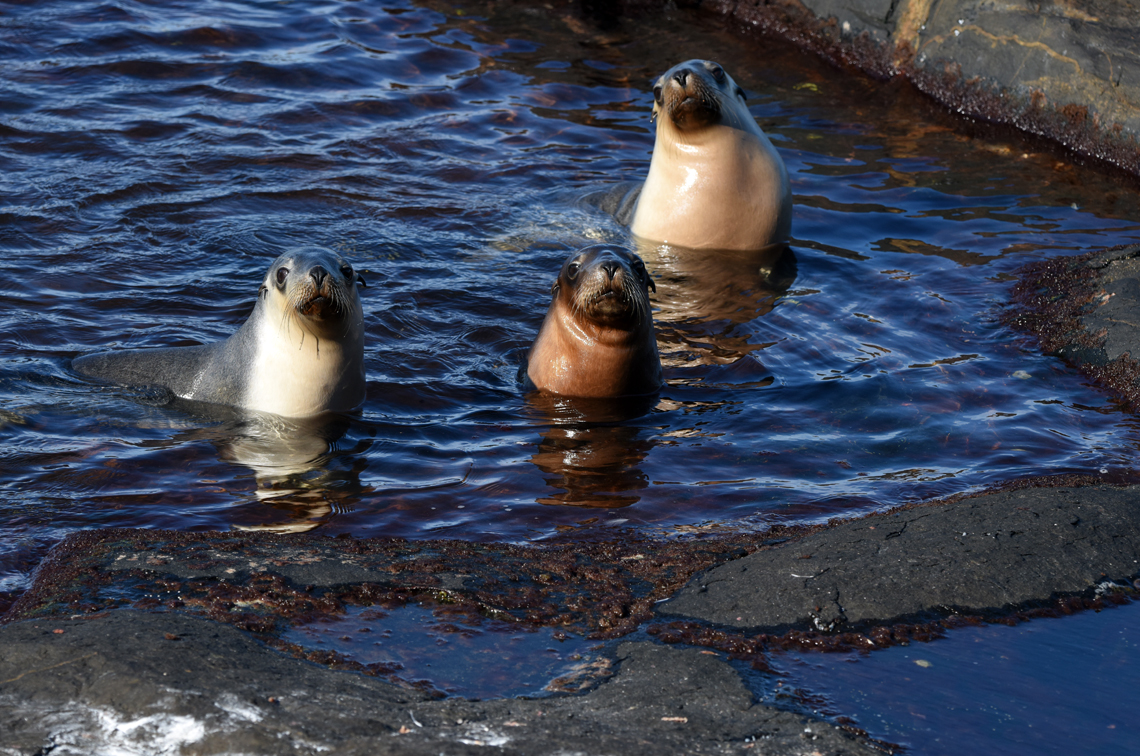 Pups in the paddle pool at Six Mile Island. Image: Holly Raudino, DBCA