Article
9 September 2026
The Great Barrier Reef is the world’s largest coral reef ecosystem. It includes thousands of individual reefs stretching along more than 2,000 kilometres of Queensland’s coastline. Its immense size creates a major challenge for scientists and managers trying to monitor its condition.
Detailed surveys led by experts provide critical information about reef condition, but they can cover only a few hundred reefs each year. This leaves large gaps in the data needed to guide conservation and restoration across the reef.
The Great Reef Census is helping to fill these gaps by combining citizen science with artificial intelligence (AI). The initiative, led by the non-government organisation Citizens of the Reef, enables volunteer community members to collect and analyse information about reefs on a scale that would not be possible through conventional scientific surveys alone. The census is not a replacement for professional monitoring, but it can provide a scale of data collection that scientists alone cannot achieve.
A new case study on the Adapt Land&Sea website explores how the Great Reef Census works and the lessons it offers for large-scale environmental monitoring. The case study features hub co-funded research by a team from the University of Queensland and James Cook University’s TropWATER that is improving the census’s survey design, site selection and image analysis methods. This work aims to ensure the census data meet the needs of scientists, reef managers and Indigenous land and sea managers.
“The scale of the Great Barrier Reef means that we need new ways to gather reliable information from many more locations. The Great Reef Census shows how citizen scientists and new technology can help us achieve this.”
Dr Chris Lawson, project leader from the University of Queensland
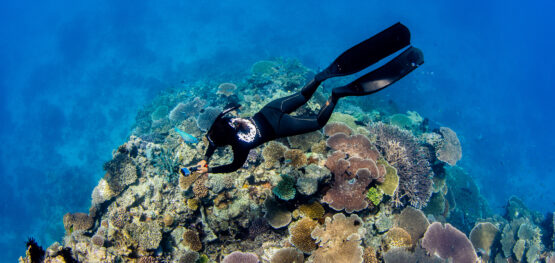
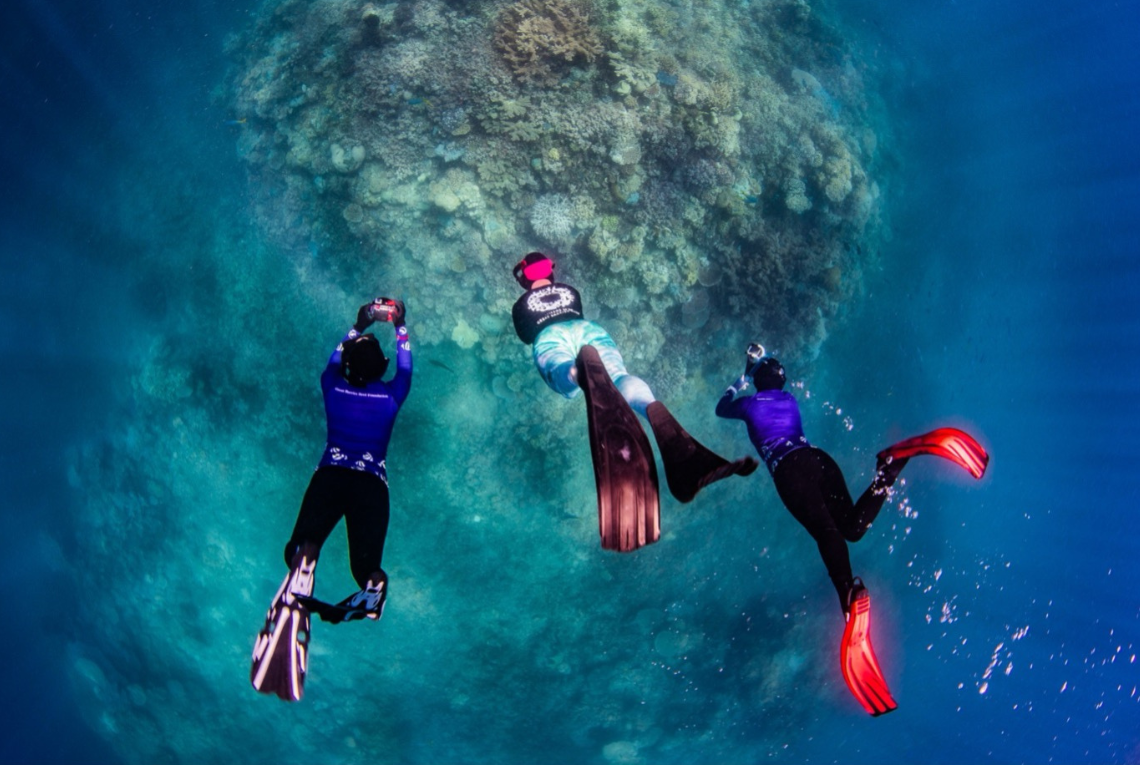
For the census, pairs of volunteer participants snorkel across selected reefs and take geotagged photographs at regular intervals. The images are uploaded to an online platform, where citizen scientists help to identify visually distinct coral growth forms, including branching, plating and massive corals.
Artificial intelligence is used to divide each image into sections before online volunteers classify what they see. This greatly speeds up a process that previously took volunteers up to 30 minutes for each photograph. People remain central to the analysis because they perform better than AI at some tasks, including identifying poor quality or unexpected images.
The research team compared the combined results from volunteers and AI with analyses completed by coral reef experts. The results differed by less than five per cent. While the data are less detailed than conventional scientific surveys, they provide reliable information about many reefs that might otherwise not be assessed.
Already, the Great Reef Census data have contributed to changes in the conservation priority ranking of 88 per cent of Great Barrier Reef reefs. Tens of additional reefs have also been identified as high conservation priorities.
“This research demonstrates that citizen science data can be both accessible and scientifically useful when the survey methods are carefully designed and the results are rigorously tested.”
Dr Chris Lawson, project leader from the University of Queensland
The research was also featured in a Marine and Coastal Hub webinar on monitoring environmental impacts on the Great Barrier Reef. Dr Lawson discussed how the census’s data collection, site selection and analysis methods have been refined to improve the value of citizen science data for reef management. The webinar also presented hub research on monitoring inshore habitats following extreme events, such as Tropical Cyclone Jasper. A recording of both presentations is available online.
Adapt Land&Sea is an information and guidance platform that helps biodiversity and conservation managers respond to climate change. Led by the National Environmental Science Program’s Climate Systems Hub, it provides science-based tools, practical guidance and case studies showing how adaptation is being considered and undertaken across Australia.
Further reading
See the case study ‘Citizen science at scale: Surveying the Great Barrier Reef’ on the Adapt Land&Sea website.