Article
4 September 2026
Photographs of southern right whales visiting Australian coastal waters are more than keepsakes. When brought together, these images become invaluable data to support conservation.
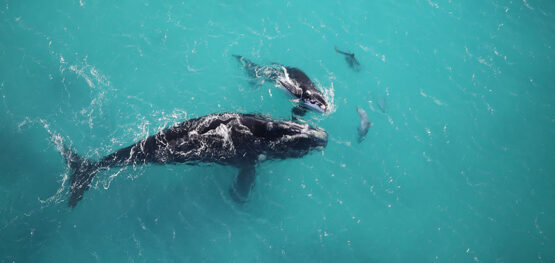
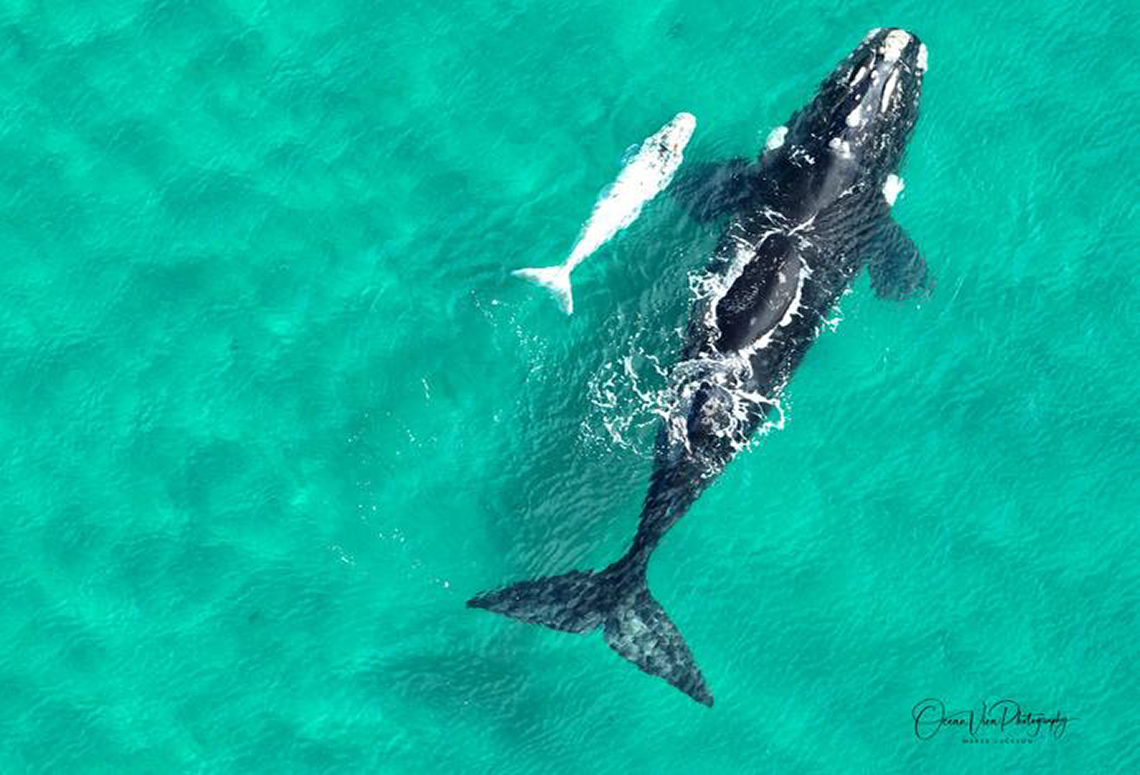
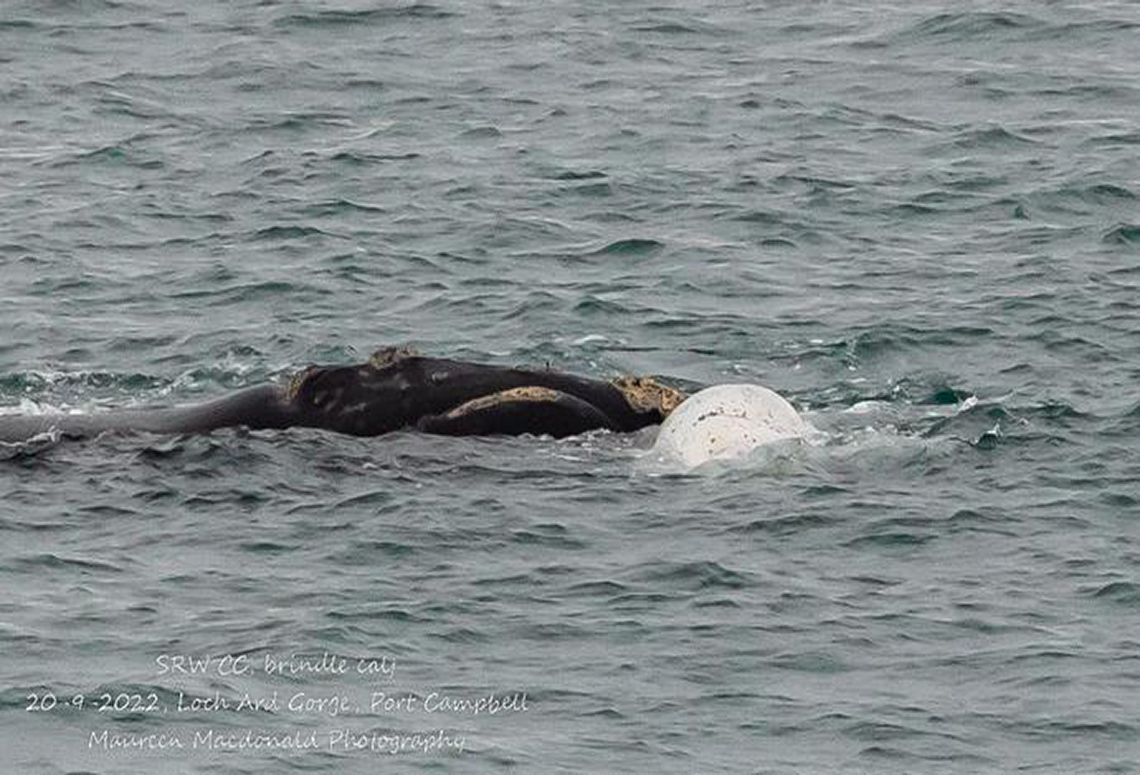
Right whales have white keratinised skin patches on their heads, as unique as a fingerprint. Photos showing these patterns (photo-identification) help researchers track individuals across different years and locations, as well as estimate population numbers and movements.
A Marine and Coastal Hub project collated 28,000 southern right whale records from eight regions in Australia spanning more than three decades. A quality-checked subset was used to update the regional catalogues and the Australasian Right Whale Photo-Identification Catalogue (ARWPIC).
The work has expanded and enhanced the value of the ‘national’ catalogue (ARWPIC) as a resource for understanding where these whales go in Australia, how long they stay and the extent of connectivity between the eastern and western populations. This understanding supports the National Recovery Plan for the Southern Right Whale 2024, which aims to halt the decline of this Endangered species.
Growing databases
In a mighty effort, photo-ID specialists collaborated with researchers, citizen scientists and other volunteers, Indigenous rangers, tour operators, community groups and government agencies. They shared knowledge and collated thousands of photos collected across three decades.
The team processed and screened the images to upload a subset suitable for photo-identification into one of three regional catalogues. They then submitted the highest-quality photos to ARWPIC, suggesting potential matches between individuals. Three curators reviewed and verified the images and matches before adding them to the catalogue.
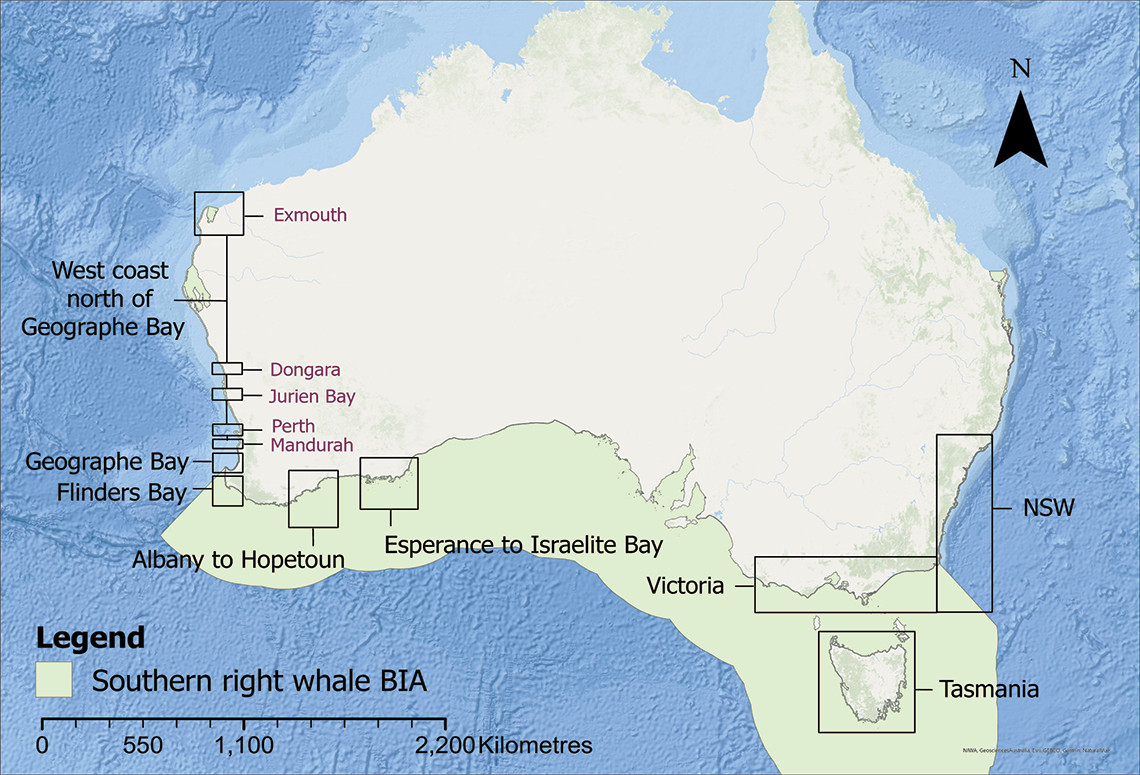
The collated images for the eastern population spanned 14 years (2009–2023). Most (92%) were citizen scientist observations held in the Victoria Government collection. The western population images covered more than three decades (1994–2025), mostly (90%) sourced in the Albany to Hopetoun region.
In total, this project added photo records for 521 whales to ARWPIC, either matching previously identified individuals or adding new ones. Collectively, these records relate to about 14% of the individual whales represented in the database.
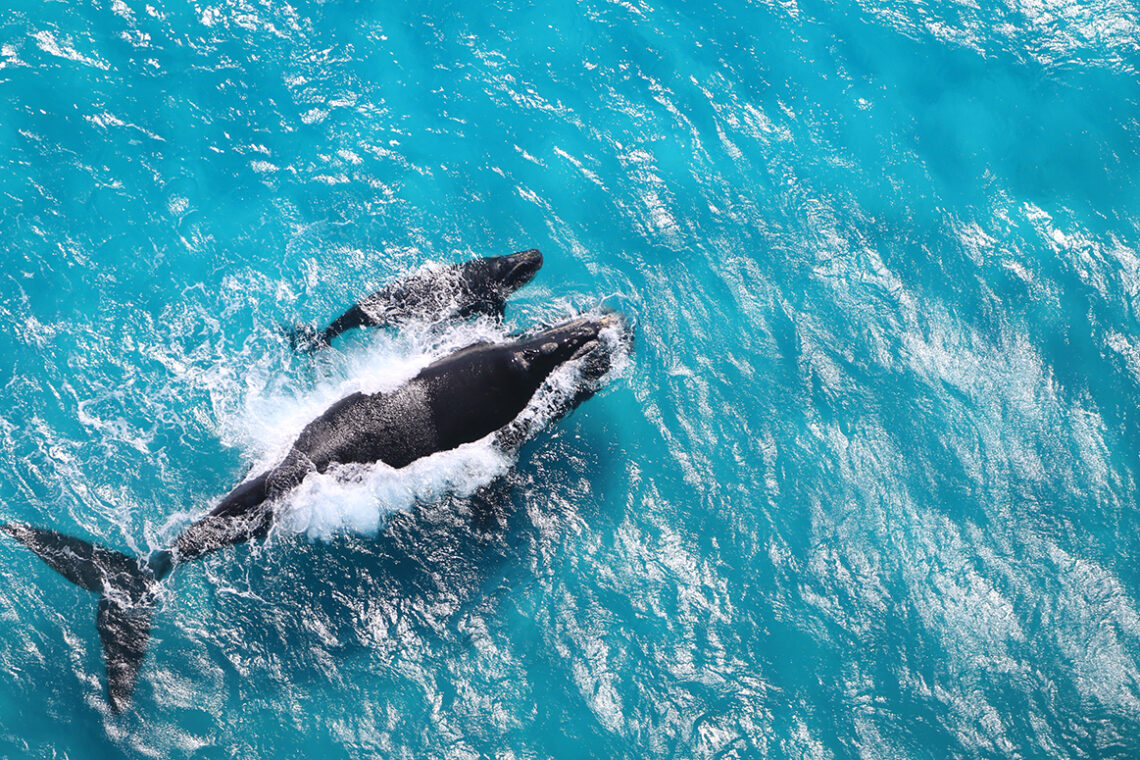
A portion of the images were obtained through new whale counts in data-poor areas. Three aerial and two vessel surveys conducted by the project team between July and September 2024 recorded 240 adults and 183 calves.
The bigger picture
New records, collation of historic photos, and subsequent matches in the regional and Australasian catalogues revealed insights on southern right whales habitat use. For whales pictured off Western Australia, the time spent in certain regions (residency) ranged from several days to 3.5 months (Cheynes Beach). The images also showed a high proportion of female-calf pairs at:
- Israelite Bay;
- Tagon Bay;
- Bremer Bay to Dempster Inlet, inclusive of Doubtful Island Bay and Point Ann;
- Cheynes Beach; and
- increasingly regular sightings in areas north of Geographe Bay (between Mandurah and Exmouth).
“This could be a signal that the species is re-establishing former breeding grounds, but may also be driven by environmental conditions,” hub project co-leader Professor Chandra Salgado Kent of Edith Cowan University says. “It also indicates that full historical range recovery has not yet been achieved.”
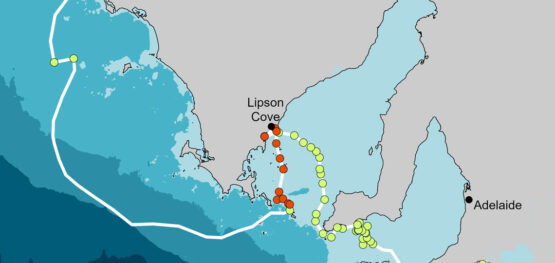
The imagery analysis confirmed site fidelity (repeated use and return to certain areas) in all the regions where multi-year records were available. Off Western Australia, whales returned to areas such as Albany-Hopetoun, Geographe Bay and Flinders Bay as soon as the following year and up to 20 years after their previous sighting.
“This evidence shows that females and adults of unknown sex remember long-used calving grounds and repeatedly return to them. They may use these areas to search for new mating opportunities, exchange information and re-establish former calving grounds.”
Project team member, Chris Burton of Southwest Whale Ecology Study and Western Whale Research
The connectivity analyses showed broadscale movements occurring within migration seasons. For example, an unaccompanied adult was observed in the Esperance-Israelite Bay, almost 100 kilometres from where it had been seen two months earlier. There was also a mother-calf pair that had occupied Flinders Bay and Geographe Bay in the same season.
“This demonstrates that key calving areas cannot be delineated based on limited surveys and that calving habitats extend beyond aggregation areas,” Professor Salgado Kent says.
The research team also found links between whales visiting the south and southwestern coast of Western Australia. Individuals were resighted at both areas in intervals of two to 14 years, suggesting cultural or genetic exchange between them.
In Australia, the eastern and western populations are considered to have genetic differences and different recovery rates from whaling. Analysis of the images uploaded to ARWPIC as part of this research showed only five individuals that had been observed in both the east and the west. For example, whale ID 5641 was first observed in 2011 at Bremer Bay off southern Western Australia. A decade later, she was seen off the coast of New South Wales and Victoria, accompanied by her calf.
“These findings reinforce that the western and eastern populations continue to need region-specific conservation strategies,” researcher and ARWPIC curator Mandy Watson says.
A more effective ‘national’ catalogue
This hub project put processes in place to facilitate future data uploads to ARWPIC. New functionalities enabled to upload large numbers of files simultaneously and bulk acceptance by the curators. The enhancements saved more than 90 hours of work for this project.
“We reduced manual work through automated processes,” ARWPIC digital and AI developer Andy Townsend of AT Design says. “We also improved data integrity and consistency by minimising human error arising from repetitive tasks.
“The combined improvements and data quality ultimately strengthen the capacity to update the catalogue regularly, which is critical for closely monitoring Australian southern right whales and producing timely research outputs.”
It is expected that the online platform ARWPIC, managed by the Australian Antarctic Division, expands to New Zealand. It is anticipated that AI enhancements, also funded by the Marine and Coastal Hub, will improve the capacity and efficiency for matching within the catalogue that now includes curated images since 1975.
Footage: courtesy of Javier Delgado-Esteban / @spacewhalestudioau
This research was made possible through the dedication and contributions of many people and organisations. They are acknowledged in the research report.