Article
5 December 2025
In October, research users were updated on the emerging findings and insights of hub project Unbroken Whispers – The Ripples Connecting Sea-Kin.
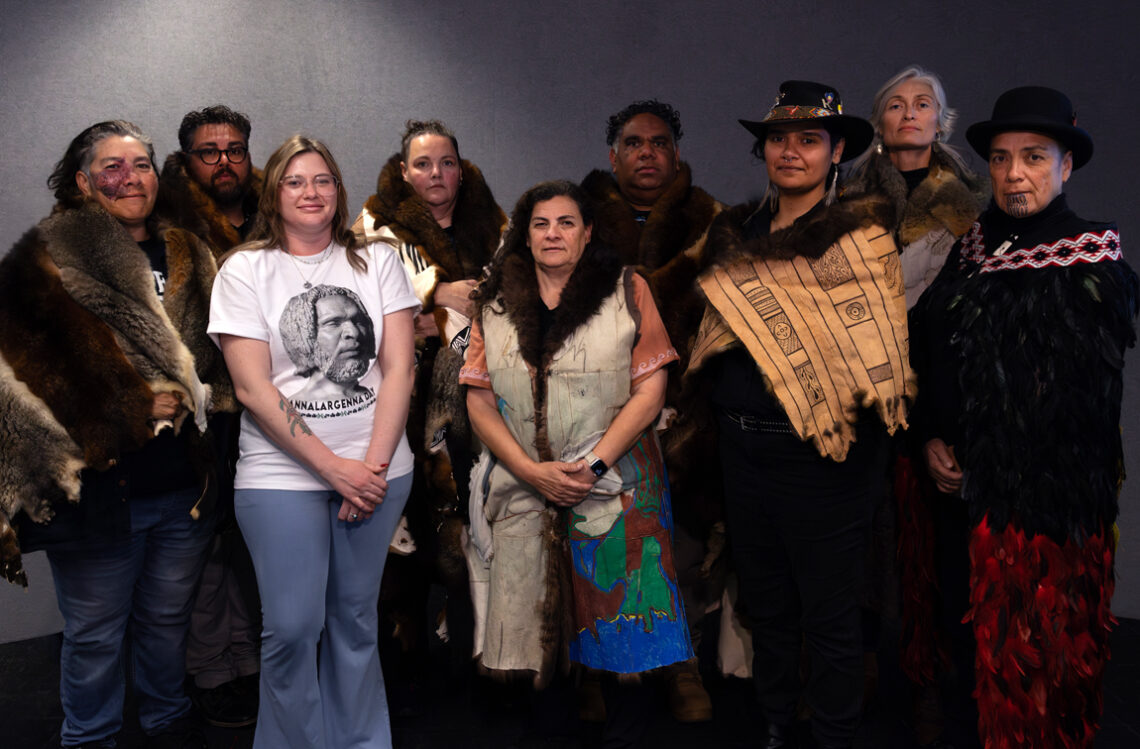
Cultural Custodians joined representatives from Aboriginal organisations, the Department of Climate Change, Energy, the Environment and Water, and Parks Australia.
The meeting was convened by Dr Chels Marshall, Dr Jodi Edwards and Natalia Baechtold from the Australian National Centre for Ocean Resources and Security at the University of Wollongong. Their project is investigating the relationships that Aboriginal Peoples hold with cetaceans and other marine cultural keystone species across south-eastern Australia.
Engaging with Sea-Kin
Communities engage with their Sea-Kin – dolphins, humpback whales, southern whales, orca, and sharks – in diverse and sophisticated ways. This includes through Traditional Ecological Knowledge and associated science enfolded in story, ceremony, daily practice, observation, intergenerational knowledge transfer, reciprocation and responsibility.
The meeting explored the project’s emerging insights and findings, and ways of carrying these forward to assist in the recovery, management and conservation of whales, dolphins and sharks. Participants also discussed how policy, governance, and practice could be expanded to be inclusive of Aboriginal Knowledge Systems.
For example, project findings about cultural insights, migration corridors, and traditional stewardship could strengthen whale recovery planning by helping to ensure the consideration of cultural as well as biological dimensions.
Other project findings have the potential to help shape government policy or guidelines around human responses to whale strandings, entanglements, and burial or repatriation. The recognition of the need for respectful treatment in accordance with cultural protocols would align with Indigenous as well as ecological values.
The project team also shared a short film capturing what the ocean and cetaceans mean to Aboriginal peoples across south-eastern Australia, and how the project holds those understandings within its purpose and methods.
The film presents strong and consistent messages . . . The ocean is not a resource. It is kin. It is ancestral. It is a living realm where obligations are felt, exchanged, and upheld. Whales and dolphins in particular stand as Sea-Kin: carriers of lore, ancestors of the ocean, navigators of story, and holders of deep cultural responsibility.
The project’s interim findings reaffirm that Aboriginal Knowledge Systems are essential to understanding these relationships, and the desire of Aboriginal peoples to see these knowledge systems meaningfully embedded within Australia’s marine governance landscape.