Article
12 March 2026
Living Shorelines Australia – an online database created in an early Marine and Coastal Hub project – has been used to demonstrate a framework for evaluating how living shoreline projects are monitored.
Living shorelines are gaining favour as a nature-based alternative to conventional engineered coastal protection structures such as seawalls and breakwaters. Typical living shoreline habitats are beaches and dunes, saltmarshes, mangroves, seagrasses and kelp forests, and coral and shellfish reefs.
These habitats increase coastal resilience through wave attenuation and sediment stabilisation. They also offer potential co-benefits such as biodiversity enhancement, productive fisheries, improved water quality and carbon sequestration.
The lack of an accessible evidence base on the technical capabilities of living shorelines impedes their use in coastal management. Monitoring on-ground projects is critical to building this evidence base. Standardised monitoring and reporting can facilitate comparisons between projects and sites, building knowledge to improve the outcomes of future investment.
The framework was developed as part of the hub project ‘De-risking nature repair activities in Australian coastal and Marine ecosystems’. Project co-leader Rebecca Morris of The University of Melbourne and her colleagues outlined the framework, and its application, in the Journal of Environmental Management.
“At the project level, monitoring is essential for informing maintenance and adaptive management of living shorelines,” Dr Morris says. “When aggregated across multiple projects, these data can build the evidence base needed to support the upscaling of different living shoreline techniques.”
Scoring monitoring activities
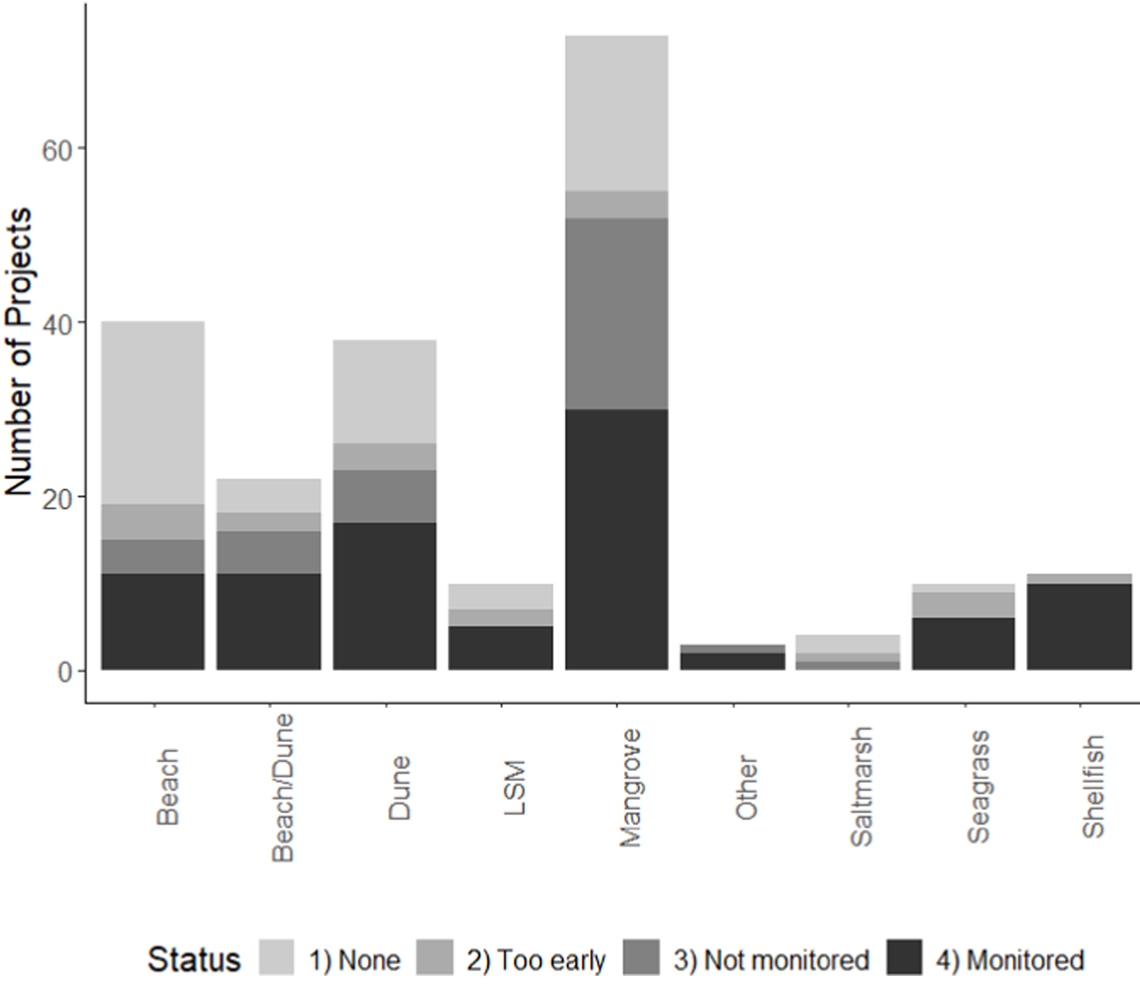
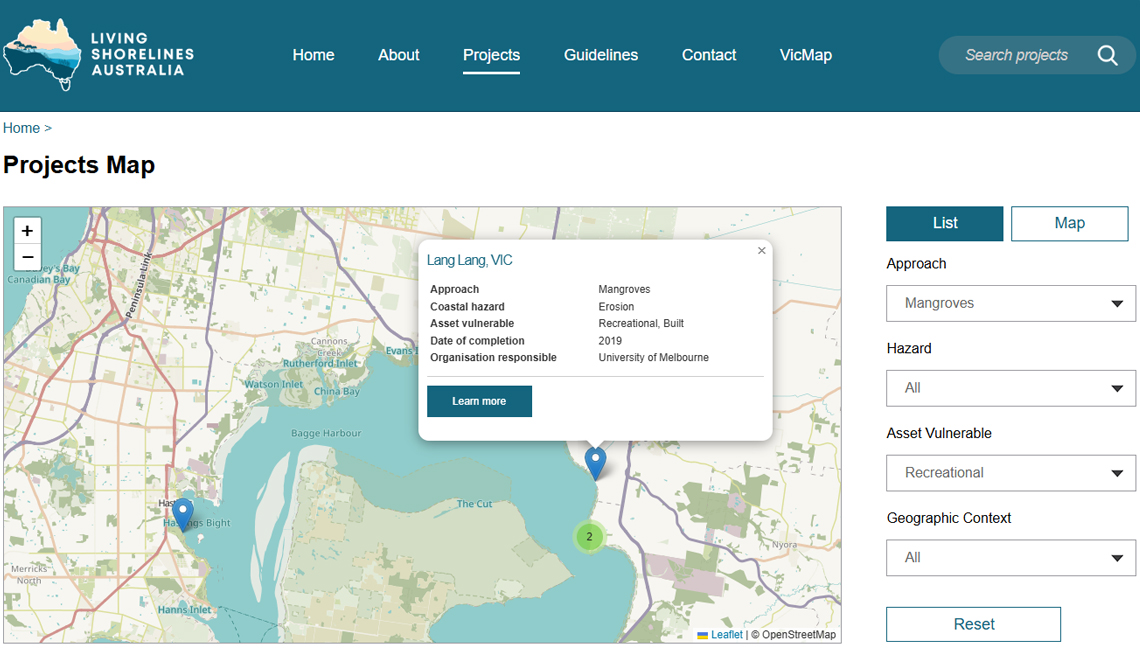
The monitoring framework was applied to living shoreline projects listed in Living Shorelines Australia, a database developed to share knowledge and build capacity among coastal practitioners. Projects with monitoring information (131) were scored from one to five according to eight monitoring metrics:
- functional design criteria;
- indicators;
- monitoring design;
- sampling periodicity;
- sampling duration;
- sustainability;
- data availability and reporting; and
- management linkage.
Overall, the evaluation found that monitoring activities often scored highly for projects that employed higher-cost techniques to protect valuable infrastructure and were part of ongoing coastal asset management programs.
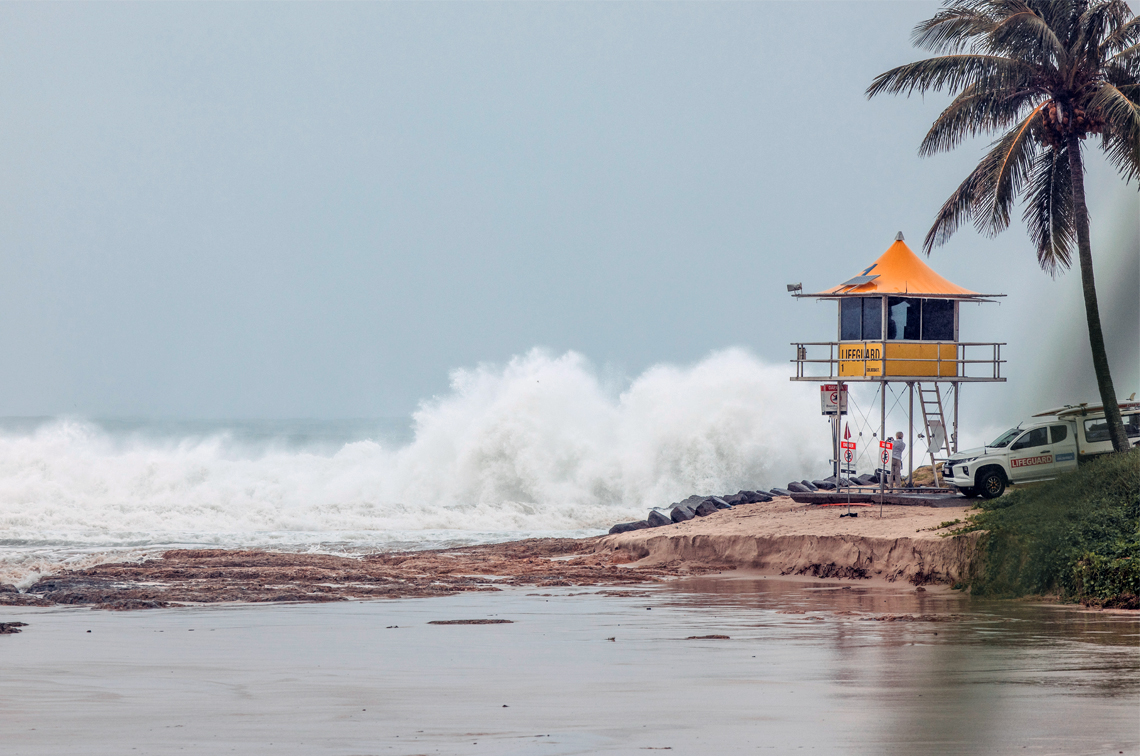
For example, larger scale, high profile Gold Coast projects such as retaining beach width and restoration following Tropical Cyclone Alfred, and sand replenishment of Adelaide beaches, were more likely to prioritise funding for monitoring.
Shellfish reef projects tended to have higher monitoring scores compared with some of the more established techniques. This reflected a focus on growing a strong evidence base to support technical guidance and scaling of their use.
In comparison, other ecosystems with a larger number of projects in the database and a longer history of use (for example more than 50 years for dune restoration, and 25 years for rock filleted mangroves) scored lower for their monitoring programs.
Adopting a living shorelines monitoring framework
“When applied across multiple projects, this framework can help assess the strength of evidence supporting different living shorelines approaches,” Dr Morris says.
“It can support project managers in navigating trade-offs when designing resource-limited monitoring programs, helping to prioritise decisions that align with project goals.
“It could also be used as a basis for creating a standardised shoreline monitoring protocol that could be implemented globally, such as that for reef biodiversity developed through Reef Life Survey.
“When co-designed with the end-users commonly responsible for living shoreline projects, such standardised monitoring protocols may help increase the proportion of monitored projects and the knowledge base available to inform technical guidance and accelerate transformative change in coastal environmental management.”
The next step will be to combine the monitoring scores with an evaluation of project outcomes. Together, these can help identify what is known (and what remains uncertain) about the effectiveness of different nature repair techniques.
Further information
- Living Shorelines Australia database.
- ‘Building an evidence base for living shorelines: a framework for evaluating the extent and adequacy of post-establishment monitoring programs’ journal article.