Article
3 June 2026
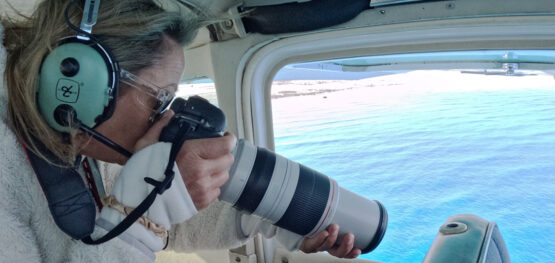
In August last year, a research team led by Dr Joshua Smith of Murdoch University flew along the coastline between Perth, WA, and Ceduna, SA, to survey calving and nursing areas of the Endangered southern right whale.
The annual aerial survey coincides with the seasonal migration of right whales to these areas where females nurse their young. It began in 1976 and has been supported by the National Environmental Science Program since 2015.
In 2025, the survey team counted 646 whales, including 304 female-calf pairs and 38 unaccompanied animals. The number of unaccompanied whales was the second lowest in the past three decades; the lowest (32) was recorded only three years ago, in 2022.
Unaccompanied animals are juvenile and non-breeding adults, often seen in small or large social groups. “Some of these groups are active at the water’s surface, where they engage in courtship and mating,” Dr Smith says. “Given the reproductive role of some of these groups, it is a concern to be seeing fewer of them.”
The number of calves produced by the population in 2025 was the highest since 2017 (303 female-calf pairs were sighted that year). Although a positive sign, these numbers are not sufficient to compensate for extreme low abundances observed in the past decade.
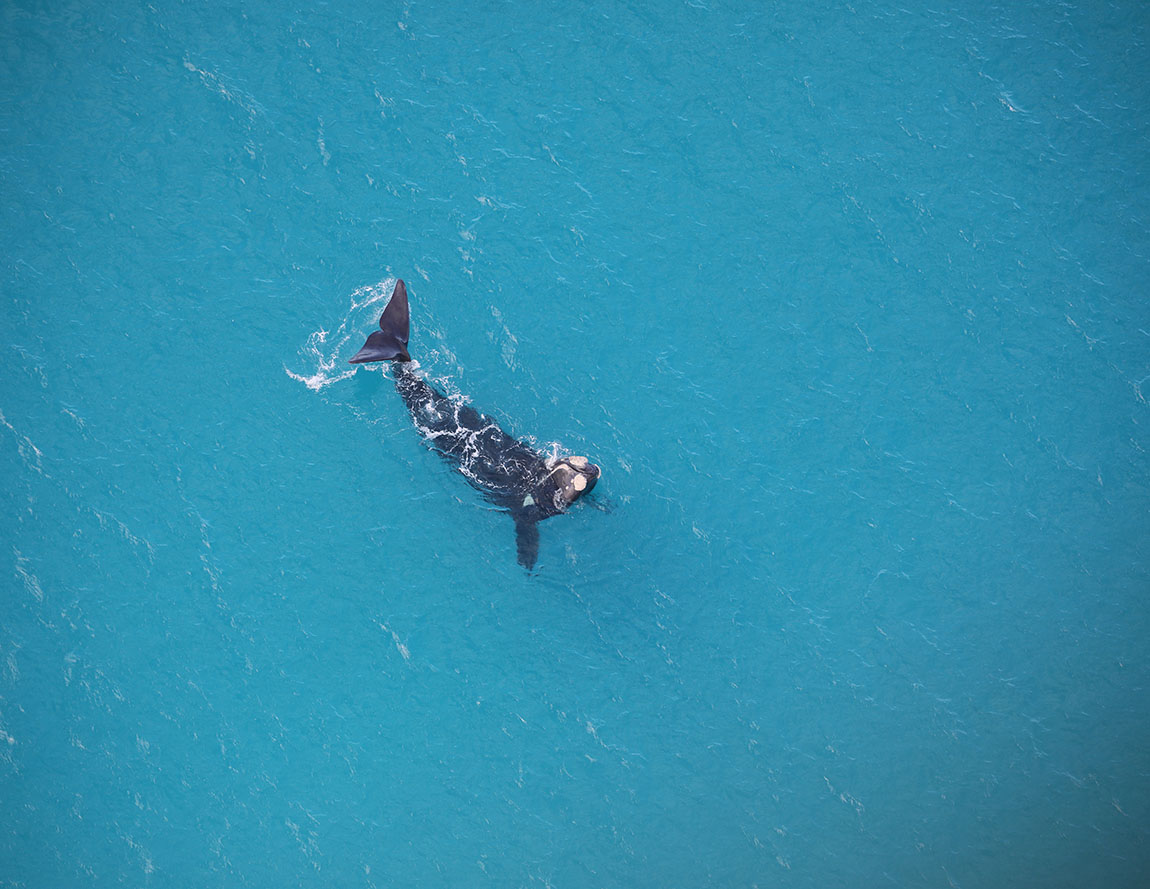 An unaccompanied whale observed at Bremer Bay, WA, during the 2025 annual aerial survey. Image: Kirsty Alexander
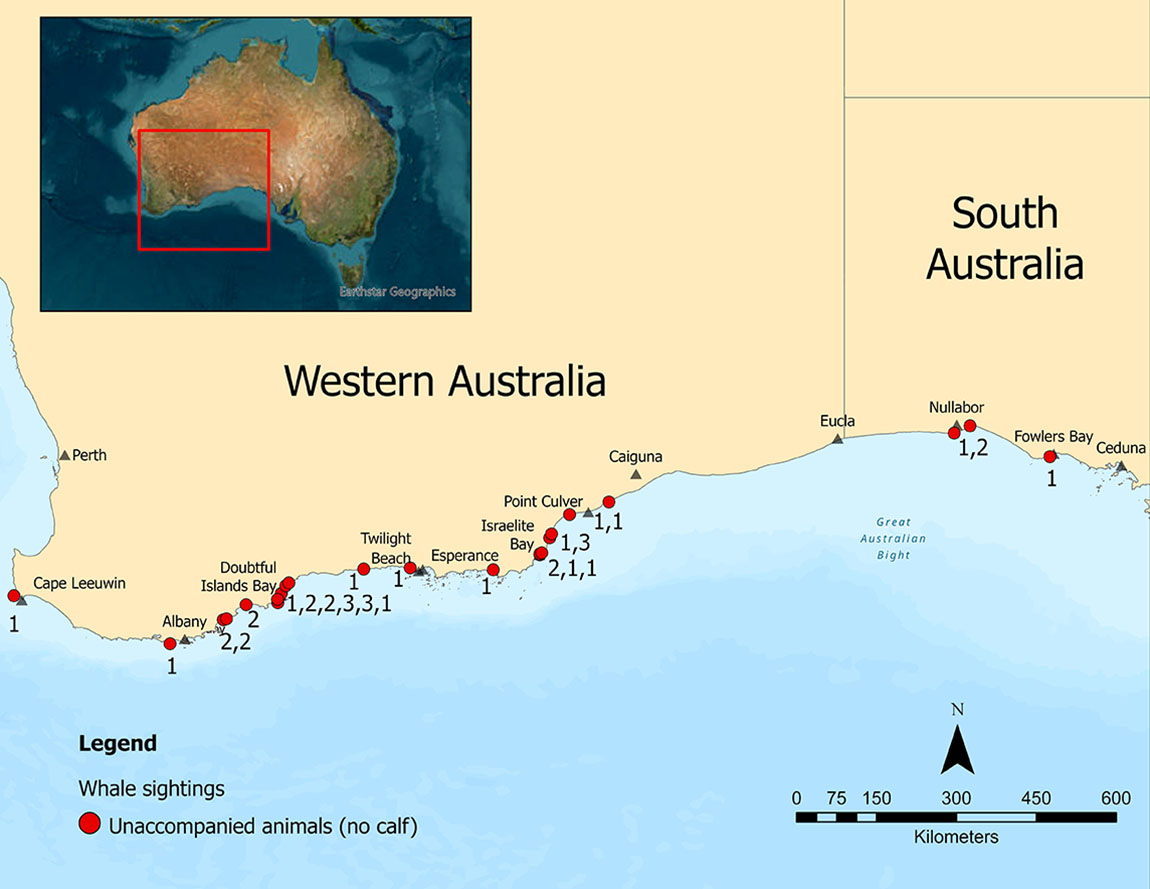 The counts of unaccompanied animals from the 2025 survey. Image: Joshua Smith
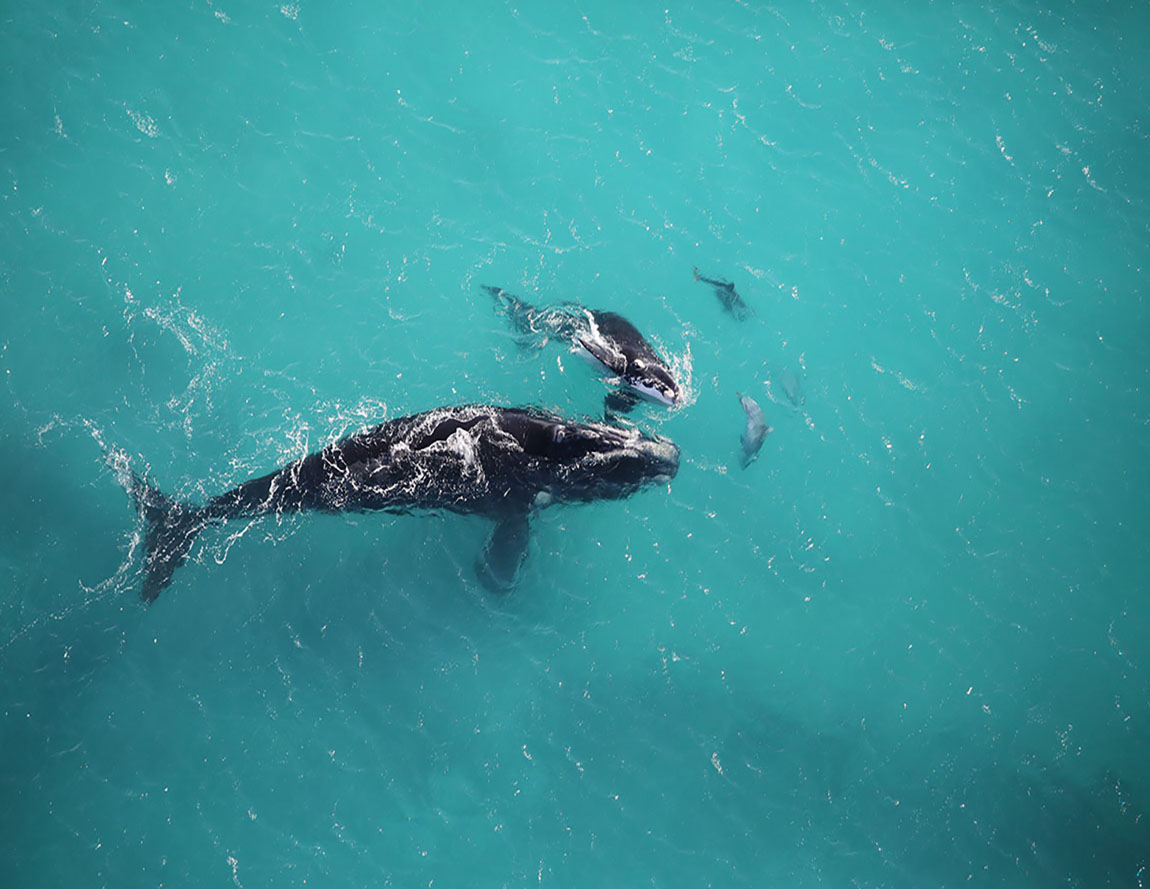 A female-calf pair observed during the 2025 aerial survey. Image: Kirsty Alexander
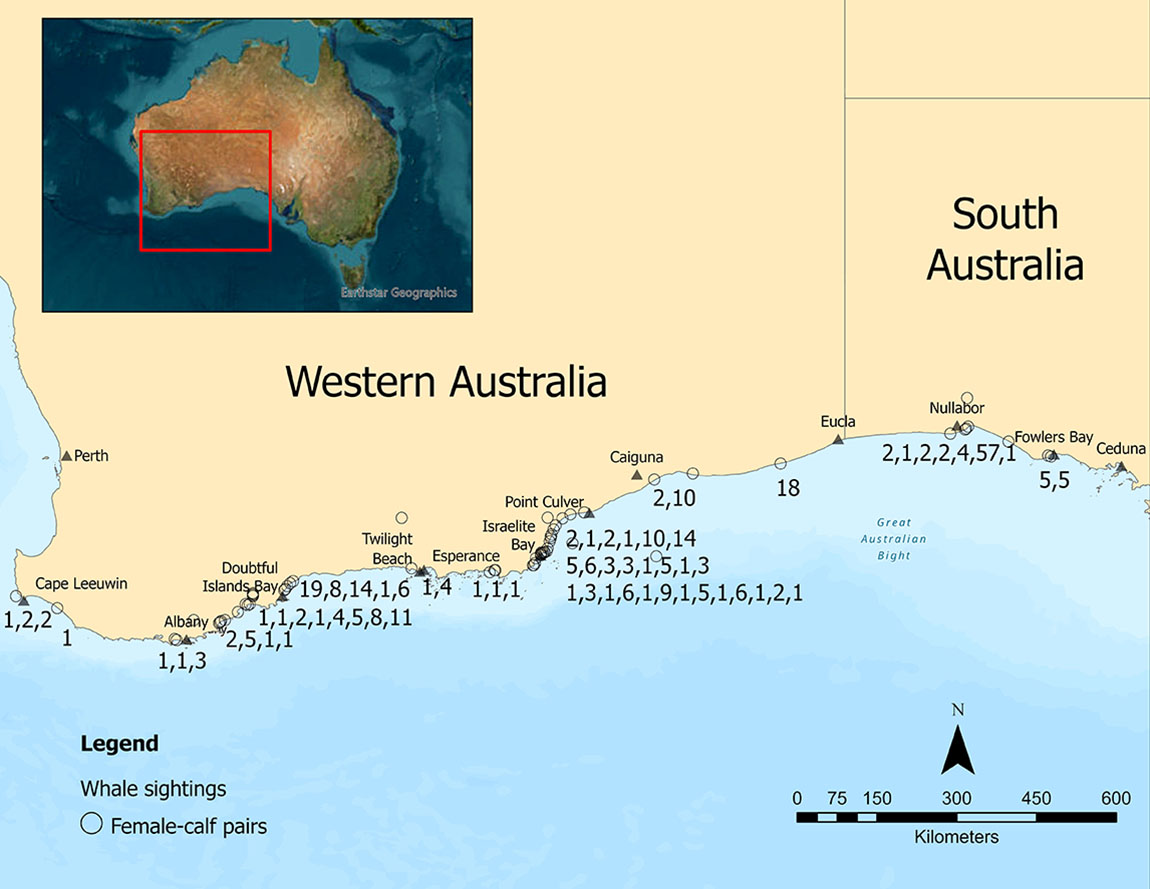 The counts of female-calf pairs from the 2025 survey. Image: Joshua Smith
Population growth remains stalled
Using data from the latest aerial survey, researchers estimate the ‘western’ southern right whale population at approximately 2,466 individuals.
In 2024, an analysis of long-term aerial survey data led by University of Tasmania PhD candidate Anne Grundlehner showed that the estimated population size is only about 16–26% of pre-whaling abundance, and that females reproduce less frequently: every four to five years instead of every three.
Having updated the analyses using the 2025 data, population estimates remain similar to the previous year. Therefore, the researcher’s conclusions are the same: population growth continues to be stalled far below pre-whaling abundances.
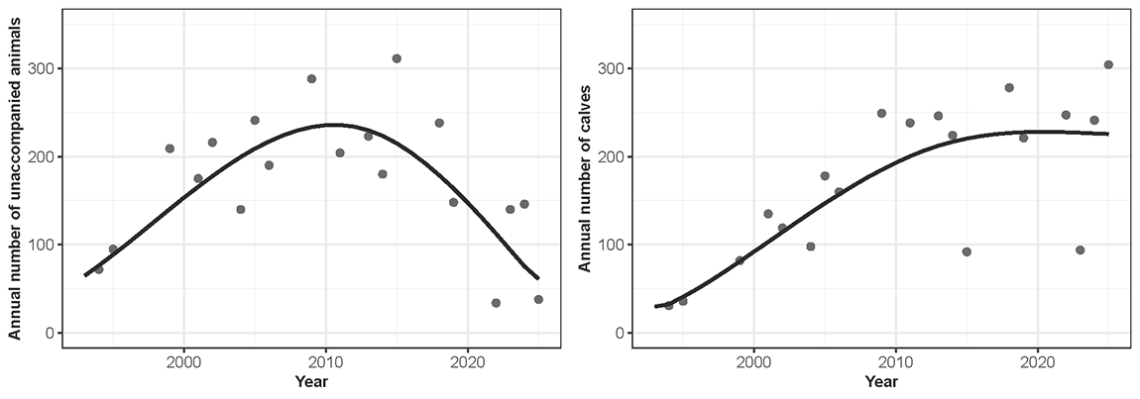
Ms Grundlehner’s calculations and modelling published in Global Change Biology showed annual abundance of calves reached a peak in 2016 and has stalled ever since, possibly undergoing a minor decline.
“The temporal trend shows that the peak years in high calf sightings, such as 2025, do not sufficiently compensate for the years of lower calf numbers to support an increasing trend in annual abundances,” Ms Grundlehner says.
Unaccompanied animals reached a peak of 248 individuals in 2011. Since then, the modelled abundance of these individuals counted along the Australian coastline has declined by approximately 74%.
Similar trends (declining abundances of unaccompanied animals and less frequent reproduction) have been observed in South American and South African populations of southern right whales. While right whale reproductive success is dependent on the mothers’ energy reserves, additional research is needed to determine what is causing the changes in population trends.
Essential data for conservation
The 2025 survey report stresses the importance of understanding the cause of high variability in whale numbers in both the western and eastern populations. This includes:
- identifying possible influences from short-term environmental variation and future climate change;
- studying the potential impacts from human-led threats; and
- assessing genetic and demographic population stability.
Dr Smith says advancing this research is crucial because, apart from the whales’ intrinsic value, they act as a critical ‘sentinel’ or indicator species for the broader health of the Southern Ocean.
The report suggests southern right whales need to be afforded high levels of protection in Biologically Important Areas, with state government marine parks being extremely important to protect coastal calving and nursing areas. For example, South Australia designated three Whale Nursery Protection Areas in 2025, and the newly established South Coast Marine Park in Western Australia has a whale conservation special purpose zone.
A selection of the 14,456 images collected during the 2025 aerial survey will be uploaded to the Australasian Right Whale Photo Identification Catalogue. This online platform is being enhanced with AI tools as part of this project and enables the public and research community to share the sightings of this species.
Further information
- The End of an Era? Trends in Abundance and Reproduction of Australian Southern Right Whales (Eubalaena australis) Suggest Failure to Re-Establish Pre-Whaling Population Size. Paper in Global Change Biology.
- Australasian Right Whale Photo Identification Catalogue