
Media release
31 July 2026
Indigenous Rangers and researchers have co-designed practical guides to give Rangers the skills they need to lead seagrass monitoring across northern Australia’s vast tropical meadows.
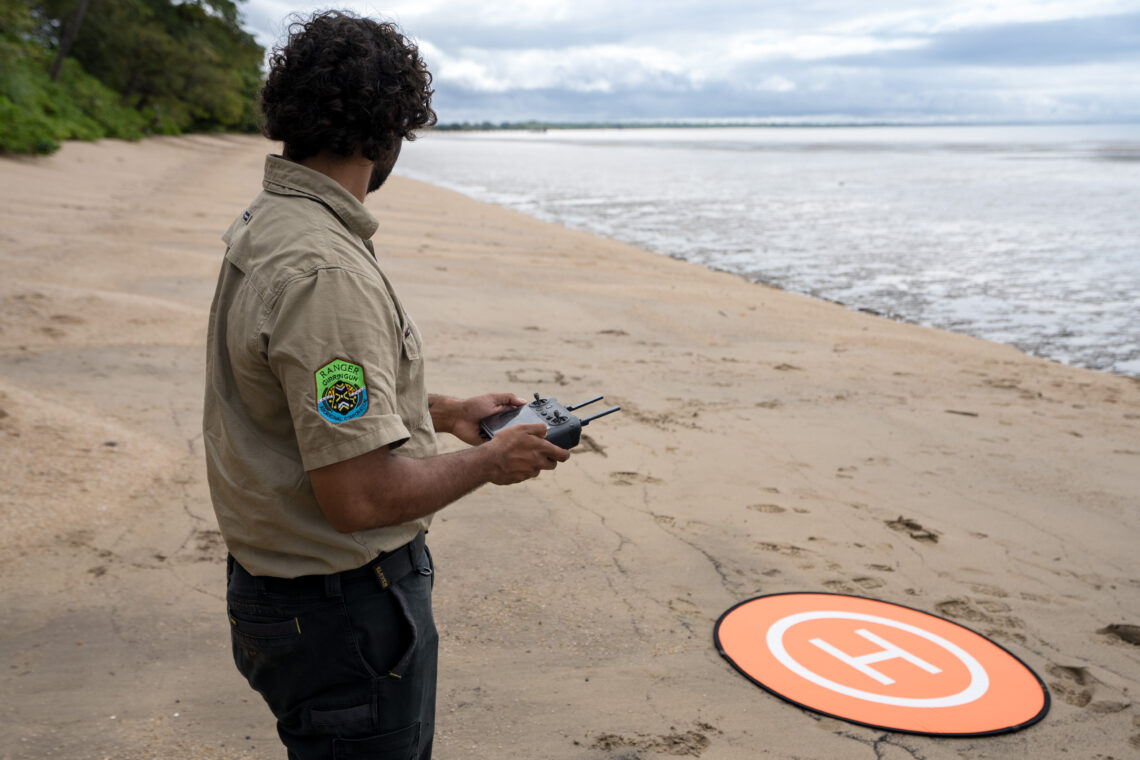
The new toolkit provides step-by-step videos and manuals for Rangers monitoring seagrass, building on long-standing partnerships that are supporting Rangers from WA to QLD, including the Torres Strait, to care for Sea Country.
Seagrass meadows are vital habitats for culturally and ecologically important species including dugongs, turtles, fish, and invertebrates, but climate change impacts, extreme weather events, and coastal development are putting seagrasses under increasing pressure.
“If we didn’t have any seagrass there would be no turtle or dugong,” Karajarri Elder Faye Dean says. “I don’t think people realise how important seagrass is.”
Rangers from Karajarri Traditional Lands Association in WA, Namultja Aboriginal Corporation in the NT, the Torres Strait Regional Authority (TSRA), and Girringun Aboriginal Corporation in QLD partnered with researchers from James Cook University (JCU) TropWATER, Charles Darwin University’s Northern Institute, and Edith Cowan University to create the new monitoring resources.
The toolkit empowers Ranger groups to lead monitoring using a set of consistent, tried-and-true methods – opening up opportunities for sharing knowledge and tracking changes in seagrass health across northern Australia.
“The methodology, the way we do the research, is the same as all the other groups right around. What we do on Marra Country can be compared to other places. It all works together to tell a story and help us to protect our sea and seagrass.”
David Barrett, Marranbala Ranger
Dr Catherine Collier of JCU TropWATER says the toolkit provides the western scientific skills needed for Rangers to take the lead in marine monitoring, filling critical gaps in environmental data.
“Northern Australia’s coastal waters are home to rich biodiversity, but in a lot of places the records are patchy or out of date,” Dr Collier says. “Rangers are doing really important work weaving together Indigenous Knowledge and Western science to fill these data gaps, seeing what habitats are there and how they might be changing, and then we can see how this fits into the bigger picture of seagrass across the region.
“Every place has a different story.”
Each video in the toolkit blends training with local connection, featuring Rangers and Traditional Owners reflecting on how they are working to protect their Sea Country and why seagrass monitoring matters to them.
“It’s important for everyone to understand the health of Sea Country. Everyone plays a pivotal role in caring for Country and doing their part to heal Country as well.”
Jade Pryor, Bandjin Traditional Owner
“Seagrass is important, and community needs to know why it’s important,” TSRA Mabuyag Ranger Terrence Whap says. “If you take away seagrass, you take away our culture.”
This project was supported with funding from the Australian Government under the National Environmental Science Program, with additional support from the Torres Strait Regional Authority, Namultja Aboriginal Corporation, Karajarri Traditional Lands Association, Girringun Aboriginal Corporation, Northern Territory Government and Great Barrier Reef Foundation.
Monitoring toolkit materials are available on the project page.
Regional highlights
Karajarri Sea Country, Western Australia
- Seagrass monitoring by Karajarri Rangers and researchers began in 2024.
- More than190 km2 of seagrass has been mapped in Karajarri Sea Country since monitoring began, growing from about four metres water depth down to 32 metres and including six seagrass species.
- Karajarri Rangers and researchers visited 347 sites by boat and 1,123 sites by helicopter in 2024–25.
- Surveys found large, previously unknown areas of seagrass and other biodiverse seafloor habitats including macroalgae, hard coral, and soft coral such as gorgonians and sea whips.
- Long-term Ranger-led monitoring is needed to understand how a shifting climate may impact these important dugong and turtle habitats.
Marra Sea Country, Northern Territory
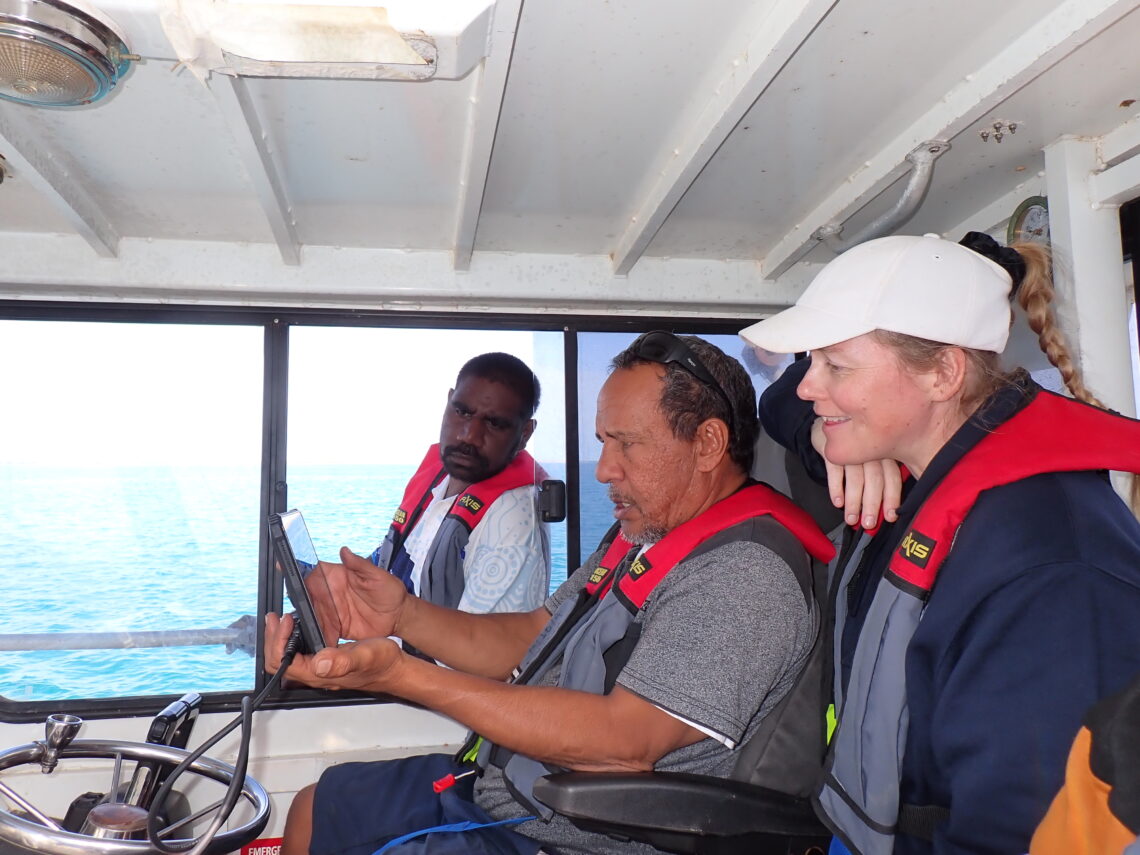
- Seagrass monitoring by Marranbala Rangers and researchers in Marra Sea Country began in 2021.
- Marra Sea Country supports high biodiversity, including seagrass, corals, mangroves, saltmarshes, dugong, turtles, dolphins, whales, sea snakes, and over 100 species of fish.
- A 65km-long seagrass meadow was recorded in 2021, containing seven species of seagrass.
- Seagrass biomass declined by 99% between 2023 and 2025 after a tropical cyclone followed by unfavourable growing conditions. Ongoing monitoring will track meadow recovery into the future.
- Observed changes in seagrass highlight the importance of funding for long-term Ranger-led monitoring programs to understand trends in habitat health and identify when targeted conservation is needed.
Zenadth Kes (Torres Strait), Queensland
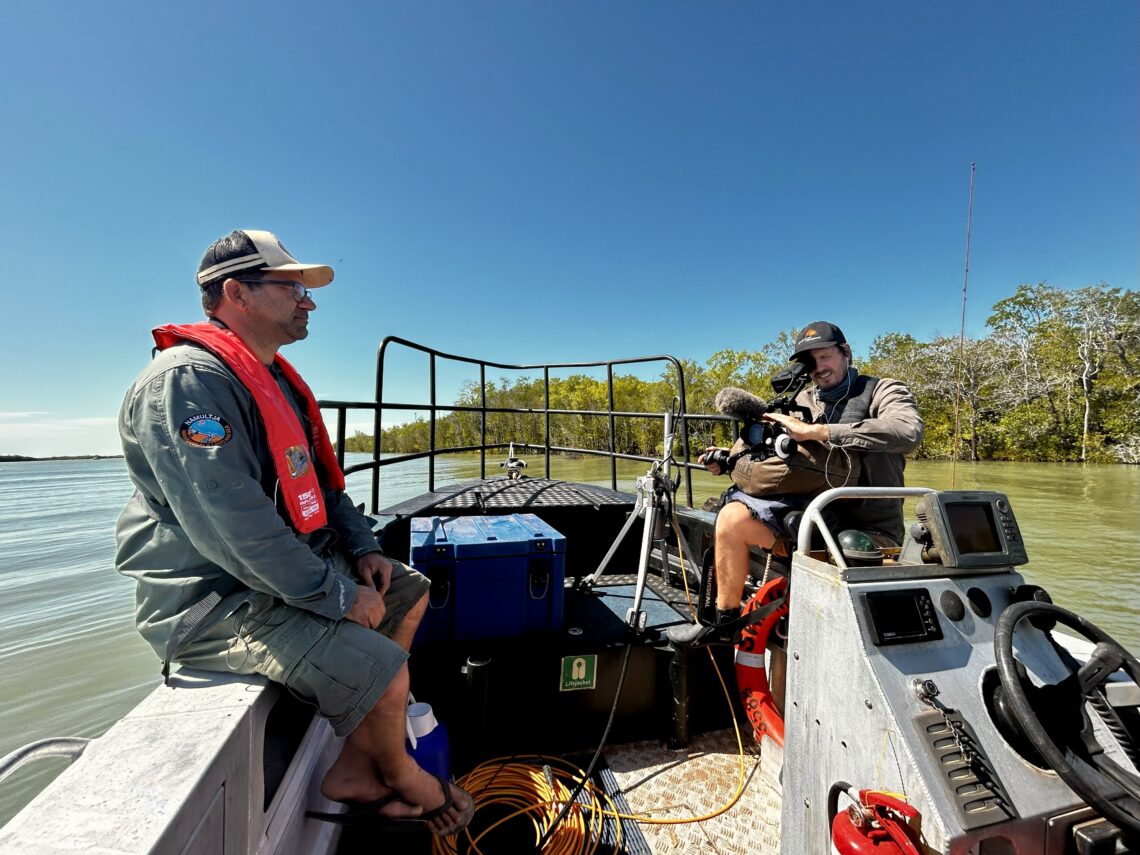
- TSRA staff, community volunteers and researchers have been monitoring seagrass in Torres Strait since 2009.
- Extensive seagrass meadows are found throughout Torres Strait. The seagrass is a prime natural indicator of the health of Sea Country. It is also important for the dugongs and the turtles. These are our totemic species so it is important to our culture, our identity and our lives.
- Torres Strait has high seagrass diversity with 11 species recorded, supporting the world’s largest population of dugong as well as significant foraging grounds for the largest green turtle nesting population in the world.
- Regular intertidal and subtidal monitoring is conducted across 19 sites in the Torres Strait, with additional surveys across the Western Torres Strait subtidal meadows conducted every five years. New sites are also being investigated by community to expand monitoring in locations important to dugong and turtle foraging.
- Seagrass meadows are showing signs of recovery after significant declines in 2019 in western Torres Strait.
- Monitoring was expanded in the region to investigate causes of the decline. Seagrass samples collected by the Mabuiag Rangers for pathogen testing were negative.
- A megaherbivore exclusion project between JCU and TSRA with the Mabuiag Rangers was also conducted to investigate the impact of dugong and turtle foraging pressure on seagrass meadow recovery.
Girringun TUMRA, Queensland
- The Girringun TUMRA covers ~7,700 km2 of Sea Country, containing diverse habitats including seagrass meadows, mangroves, and coral reefs.
- Seagrass meadows around northern Hinchinbrook Island support one of the Great Barrier Reef’s dugong hotspots.
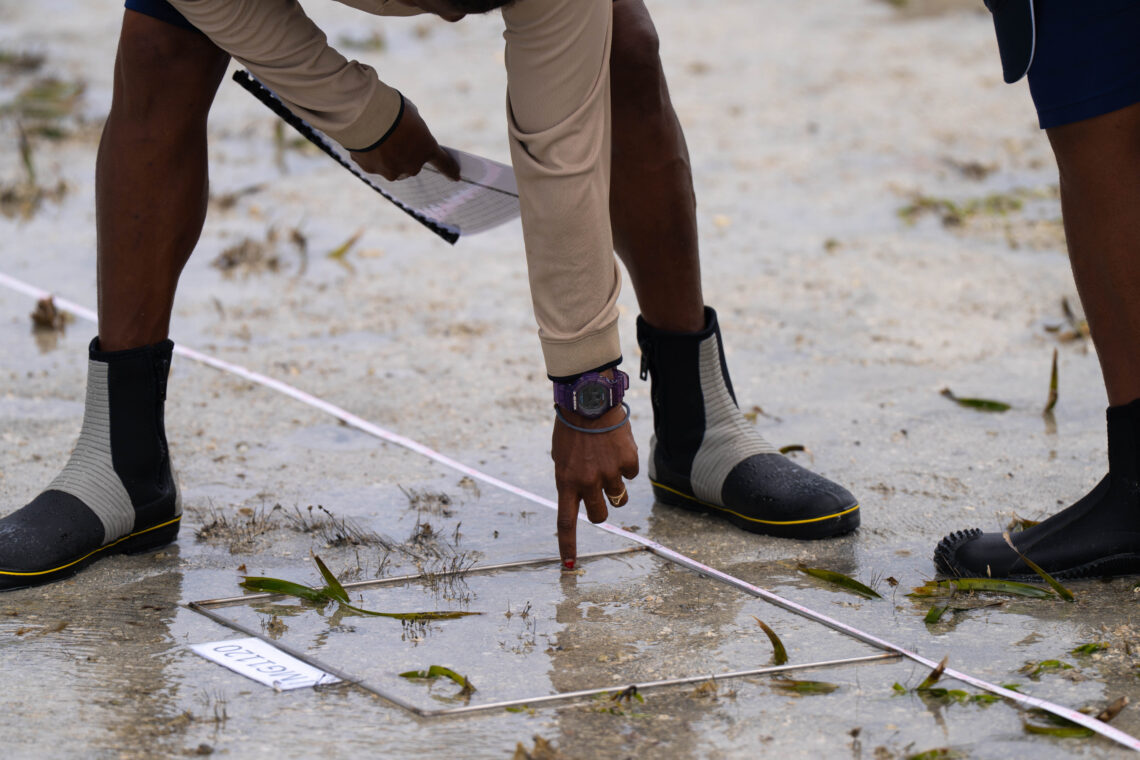
- Seagrass monitoring by Girringun Rangers and researchers in the Girringun TUMRA began in 2022.
- Exceptionally high rainfall in 2024–25 led to a major decline in seagrass at Lucinda, but there is hope for natural recovery.
- Observed changes in seagrass highlight the importance of funding for long-term Ranger-led monitoring programs to understand trends in habitat health and identify when targeted conservation is needed.
Related stories
Article
Developing a toolkit for ranger-led seagrass monitoring across northern Australia’s Sea Country
Article
A century of shared seagrass data strengthens Sea Country management across northern Australia
Article
Indigenous-led feral ungulate control offers new pathways for biodiversity and cultural conservation
More stories