Article
31 August 2026
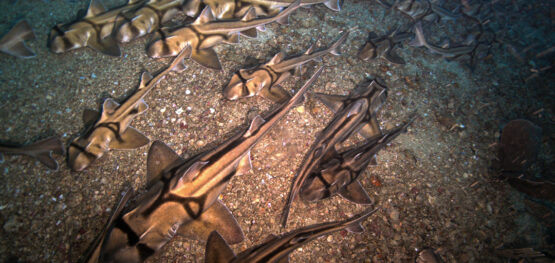
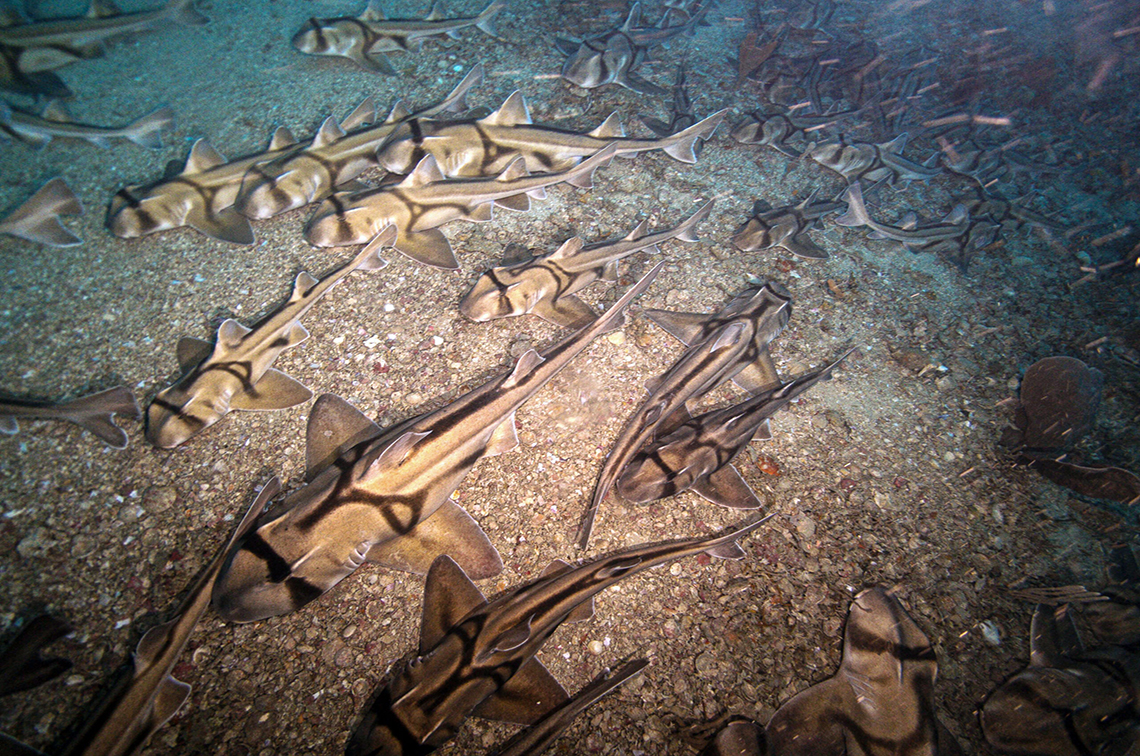
Research footage of massed Port Jackson sharks acquired during surveys of Bass Strait’s Beagle Marine Park, south of Victoria, has provided evidence for national and international conservation initiatives.
The seasonal shark aggregation was observed in 2018 and 2024 during surveys funded by the Marine and Coastal Hub and its forerunner, the Marine Biodiversity Hub.
The aggregation was considered in the re-zoning of the area as a highly protected National Park Zone in the new South-east Marine Parks Network management plan. It also prompted the identification of an Important Shark and Ray Area (ISRA) by the International Union for Conservation of Nature (IUCN) Species Survival Commission (SSC) Shark Specialist Group (SSG).
An international tool for conservation
ISRAs are portions of habitat important for one or more shark, ray or chimaera species. The IUCN SSC SSG is leading a collaborative initiative to map these areas around the world, in an effort to provide knowledge for place-based conservation and management.
The Hogan-Kent Islands ISRA in Beagle Marine Park is one of 158 ISRAs identified across Australia and the Southeast Indian Ocean. It covers an area of 0.81 square kilometres and extends from the sea surface to a depth of 65 metres. It was categorised under criterion C of the ISRA framework, which identifies areas where the sharks reproduce, feed, rest or move.
“At the moment, we think that these sharks gather in this area during winter to feed before moving to coastal regions of Australia, where they are known to lay their eggs,” Marine and Coastal Hub project leader Dr Jacquomo Monk said. “It’s also quite possible that they aggregate at Beagle for other purposes, as the 2024 aggregations consisted mainly of females.”
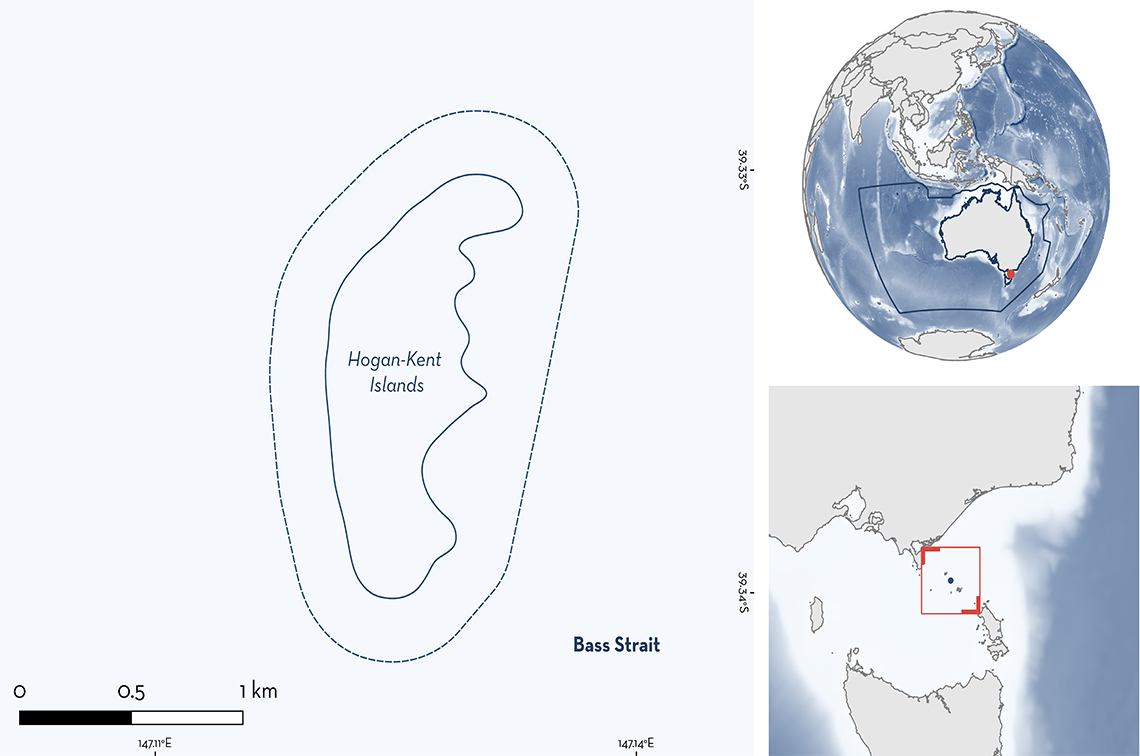
“This ISRA hosts one of the, if not the, largest aggregations of Port Jackson sharks in the world,” ISRA team member Ryan Charles said. “Highlighting this critical habitat wouldn’t have been possible without the input from the research team and their ability to share these findings across multiple years.”
Although ISRAs don’t enforce any regulation, the initiative aims to draw stakeholders’ attention to preserve sharks in identified significant habitats and provide a scientific framework useful for management.
“Recognising this area ensures that this important habitat is visible in future conservation and planning decisions,” Deputy Chair of the IUCN SSC and Chair of the SSG Dr Rima Jabado said. “ISRAs can help managers identify where monitoring or additional consideration may be needed when reviewing zoning, fisheries activities, infrastructure development or other uses of the marine environment.”
Special protection under new management plan
In 2025, Parks Australia published the plan that will guide management of the South-east Marine Parks Network until 2035. It follows the first plan published in 2013 and has been informed by the growing scientific knowledge about the ecosystems in this area.
The new plan incorporated National Park Zones (IUCN Category II protected areas) into seven of 14 marine parks within the network. This contributes to the Australian Government’s target of having at least 30% of Australia’s ocean in highly marine park zoning by 2030.
In Beagle, 479 km2 between Hogan and Kent islands are now a National Park Zone. This regulation prohibits activities such as fishing, aquaculture, offshore wind energy, petroleum exploration and mineral seabed mining. Other operations such as research, and the construction and operation of pipelines require authorisation.
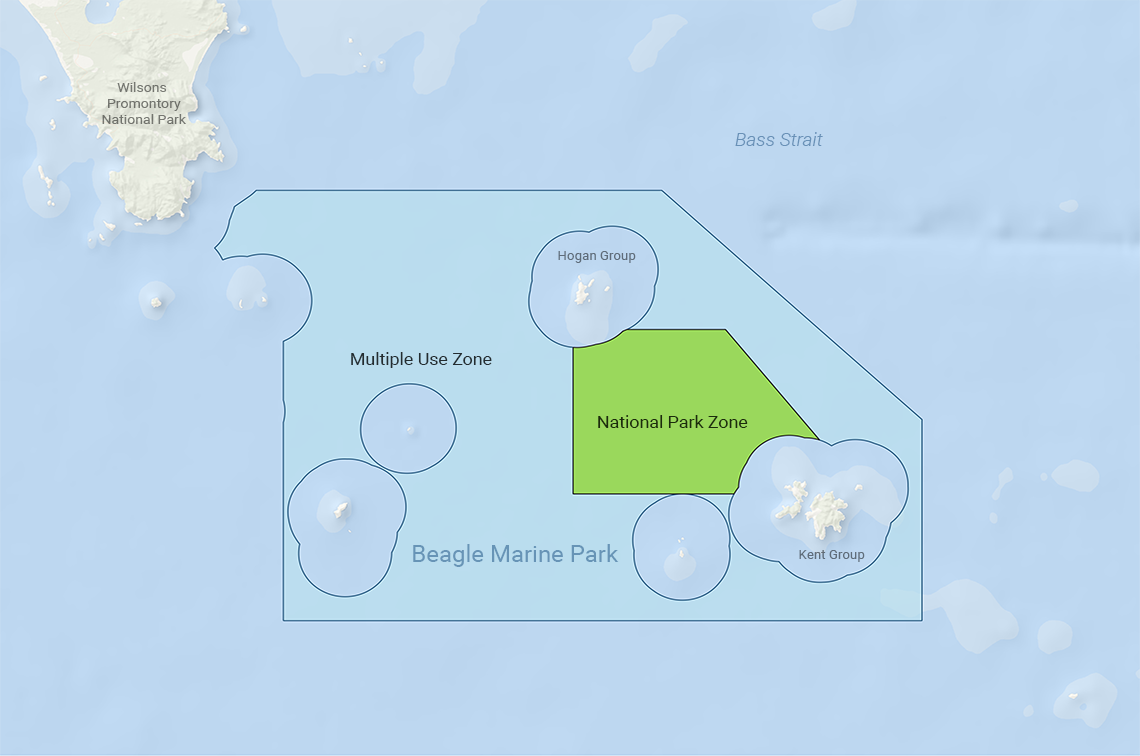
Dr Monk said surveys and direct contracts with Parks Australia have been critical for contextualising the ecological importance of these newly protected regions in the South-east network.
“Hub surveys have provided evidence to evaluate the adequacy and representativeness criteria that underpin effective conservation planning,” Dr Monk said.
“Before, the understanding of these areas was mainly based on very limited sampling and broad-scale bathymetric information. We now have fine-resolution maps of seabed structure, extensive underwater imagery and quantitative observations of benthic communities.”
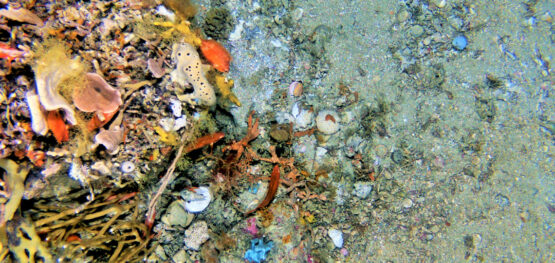
The 2025 management plan recognised Beagle’s mesophotic (mid-light) reefs as a key natural value supporting biodiversity. According to Dr Monk, what makes these reefs unique is a combination of a rare geological setting with highly productive oceanographic conditions.
“These are isolated rocky reef habitats within Bass Strait, where most of the seabed is sediment dominated,” Dr Monk said. “Here, strong tidal mixing creates productive conditions that support diverse benthic filter feeding communities and a wide range of fish and invertebrates.
“The geological history of this place, linked to the ancient Bassian land bridge, has also shaped distinctive habitats that are uncommon elsewhere in southeastern Australia.”
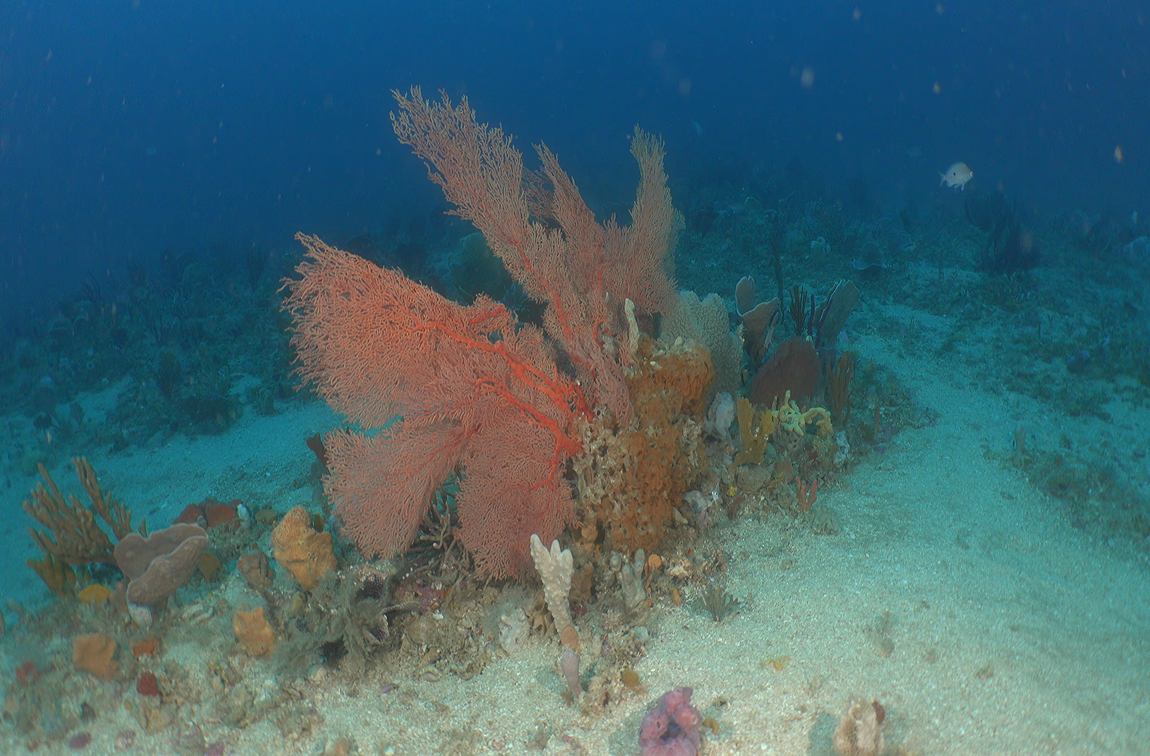 Mopsella gorgonian observed at Beagle Marine Park during the 2024 survey. Image: NESP/IMAS
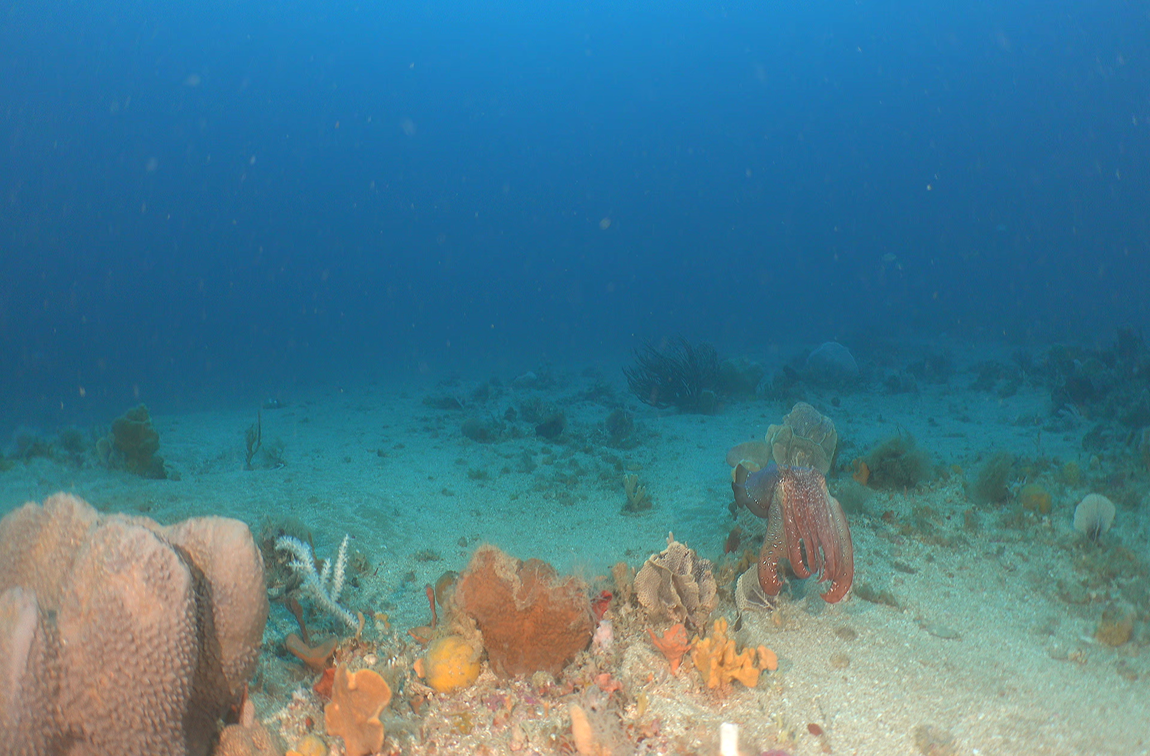 A cuttlefish blends in among sea sponges in Beagle Marine Park. Image: NESP/IMAS
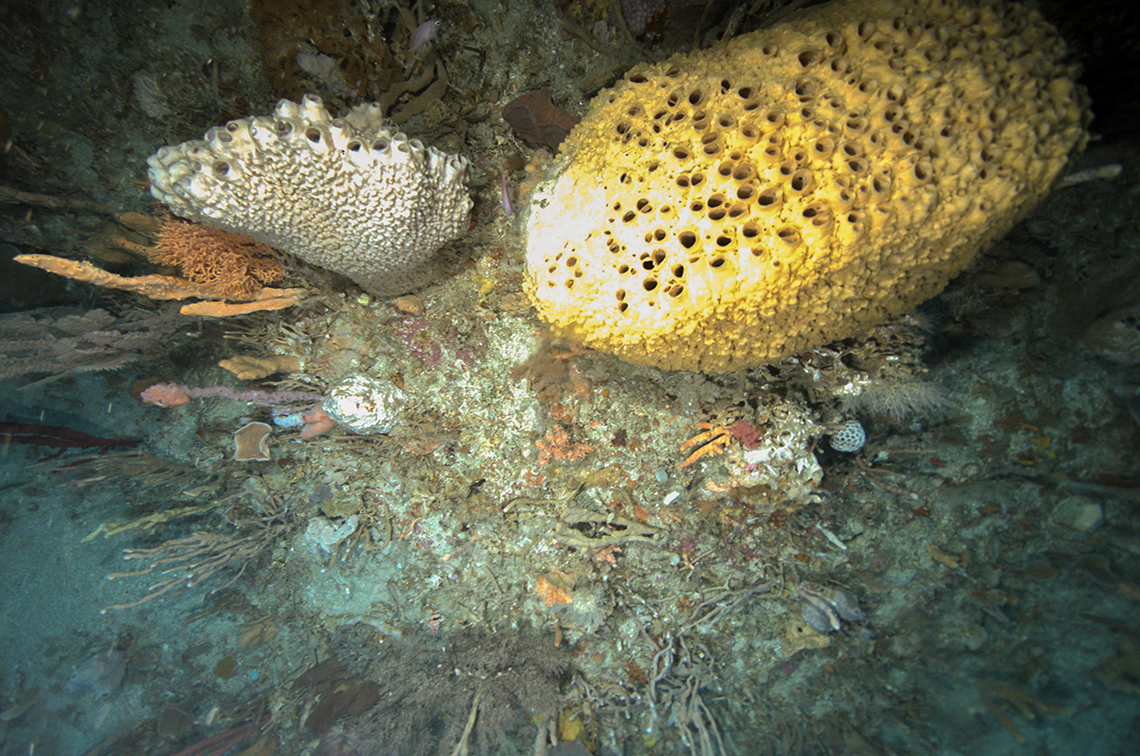 Hub research has identified a high diversity of filter feeding sponges at Beagle Marine Park. Image: NESP/IMAS
National Park Zones provide for the protection and conservation of ecosystems, habitats and native species in as natural a state as possible. They can also be used as reference sites to observe how ecosystems change in the absence of extractive activities.
“At Beagle, this zone provides a critical benchmark for assessing the environmental effects of offshore wind developments and the decommissioning of nearby oil and gas infrastructure,” Dr Monk said.
“The designation of National Park Zones and ISRAs alone doesn’t guarantee conservation outcomes, but it provides a stronger framework for protecting these ecosystems and highlights the need for monitoring to understand how these measures contribute to long-term ecosystem condition.”
Science-driven management
For more than10 years, the hub has partnered with Parks Australia to deliver foundational knowledge and tools for marine park management.
“The development of field manuals, standardised survey protocols, and support of national platforms for managing and analysing data has created a consistent, repeatable framework for collecting and interpreting ecological information,” Dr Monk said.
Parks Australia Senior Science Advisor, Dr Steffan Howe, said the surveys were also part of work toward establishing a national monitoring program.
“The work that Parks Australia has been doing with the hub has helped create a common language and improved understanding of natural values, pressures and habitat uses,” Dr Howe said.
“It’s like building a house together, this work helps to steer the science community to tangible national outputs that benefit all Australians.”