
Webinar, Video
23 September 2026
This Marine and Coastal Hub webinar held on 17 September 2026 shared hub research on southern right whale monitoring, aggregation areas, and approaches to improving data effectiveness.
Researchers reported on long-term trends, movements and connectivity of southern right whales, and efforts to better understand population change, areas of important habitat, and movements between eastern and western subpopulations.
Presentation 1: Long-term trends in the western population of Australia’s southern right whale
Fifty years of monitoring data revealed population growth of the ‘western’ southern right whale has stalled and is possibly undergoing a decline. In this video, Dr Joshua Smith of Murdoch University, and Anne Grundlehner of University of Tasmania, talk about the annual aerial survey that has been conducted since 1976 and the population trend analyses derived from it. The National Environmental Science Program has funded the aerial survey of the ‘western’ southern right whale since 2015.
Presentation 2: Movements and connectivity of southern right whales
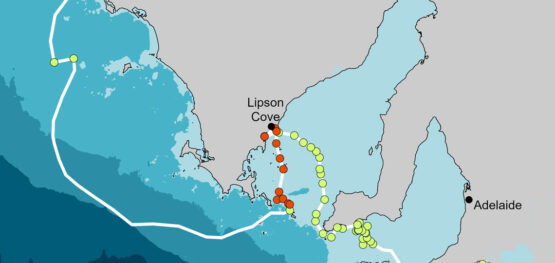
Satellite tagging and tracking of southern right whales has provided new insights into their movements, behaviour, and exposure to marine industries, highlighting potential risks, and opportunities for management intervention. In this video, Professor Luciana Möller and Claire Wouters of Flinders University share the results of a hub project that tagged four southern right whales at Encounter Bay, on South Australia’s Fleurieu Peninsula.
Presentation 3: Building a national picture of southern right whales in Australia
In a mighty collaborative effort, this hub project collated and processed 28,000 southern right whale images from eight regions in Australia spanning more than three decades. A quality-checked subset was used to update the regional catalogues and the Australasian Right Whale Photo-Identification Catalogue (ARWPIC). In this video, Professor Chandra Salgado Kent of Edith Cowan University talks about the process of bringing together information across Australia to develop a more comprehensive national picture of southern right whales.
Related stories
Article
Southern right whale tracking reveals new calving grounds off South Australia
Article
Catalogue updates and surveys sharpen the national view of southern right whale movements, habitats and populations
Article
‘Western’ southern right whale recovery remains stalled, 2025 survey shows
More stories